BMS Introduction
BMS is an abbreviation for Battery Management System. The main function of BMS is to ensure battery safety and extend battery life. Regulations stipulate that all lithium batteries must be equipped with a BMS system to be used.
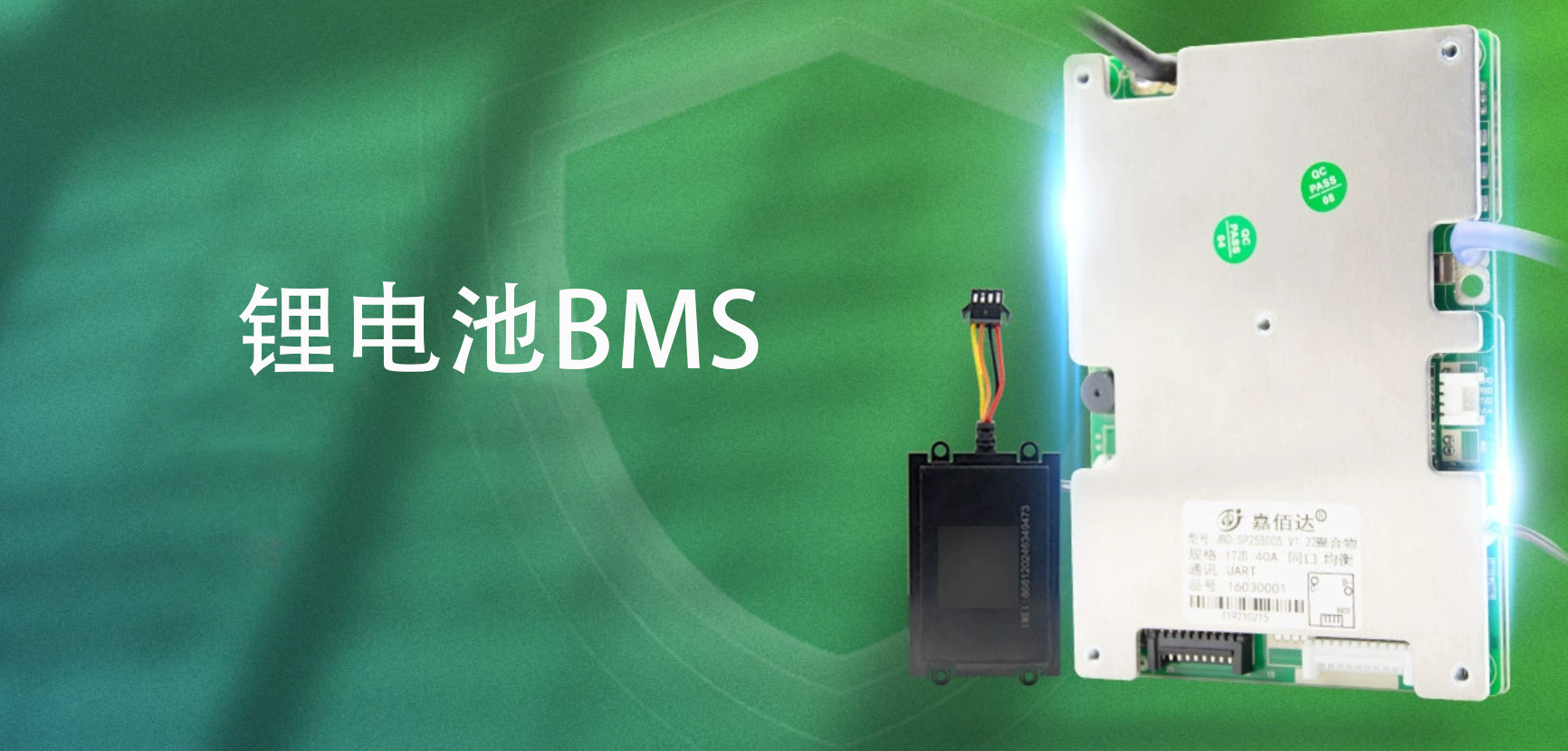
Basic Functions of BMS
The basic functions of a lithium battery mainly consist of five major functions: measurement, protection, control, state of charge (SOC), and communication.
1. Measurement Function
Tests the battery's voltage, temperature, and charge/discharge current, providing relevant basic data for subsequent protection, control, and SOC (State of Charge) settings. The accuracy and precision of these measurements directly determine the quality of the entire system.
2. Protection Functions
A well-functioning BMS generally has six basic protection functions, as follows:
a. Overvoltage Protection (OV), also called Overcharge Protection
During charging, if the voltage of any cell in the battery pack becomes overcharged, the battery system will activate overcharge protection, shutting down charging to ensure battery safety.
b. Undervoltage Protection (UV), also called Over-Discharge Protection During discharge, if the voltage of any cell in the battery pack becomes over-discharged, the battery system will activate over-discharge protection, shutting down the discharge process and extending battery life. c. Overcurrent Protection (OC) During charging or discharging, if the current exceeds the system's set value, the battery system will shut down charging or discharging to prevent damage to the battery.
d. Short Circuit Protection (SC)
During charging or discharging, if a short circuit occurs between the positive and negative terminals of the battery, the battery current will be very large instantaneously. The battery system will shut down charging or discharging to prevent damage to the battery.
e. High Temperature Protection (OT)
When the battery temperature exceeds the battery's maximum operating temperature range, the system will actively shut down charging or discharging to ensure battery safety.
f. Low Temperature Protection (UT)
When the battery temperature exceeds the minimum operating temperature range, the system will actively shut down charging or discharging to prevent damage to the battery.
3. Control Functions
Control functions mainly refer to charging and discharging control and power balancing functions.
Charging/discharging control refers to the control that shuts off the charging or discharging switch once protection is activated. In circuit terms, it's the control function of turning the power device MOSFET on or off. Power balancing is divided into passive balancing and active balancing. Currently mature technologies generally use passive balancing, which adjusts different series voltages through resistor discharge. Simply put, it discharges some of the higher voltage and replenishes some of the lower voltage. The general balancing strategy is charging balancing. Battery consistency is mainly achieved through the consistency of the cells. The balancing current is very small, generally around 10-50mA, only adjusting the differences in self-discharge. It's very difficult to balance batteries with very poor consistency to a uniform state.
4. State of Charge (SOC)
SOC generally refers to the remaining battery percentage. SOC reminds users of the battery's remaining battery life. There are many SOC strategies, with mature technologies including the ampere-hour integral method, the ampere-hour integral method with voltage correction, and the Kalman filter method.
SOC algorithms generally need to be adjusted based on the characteristics of the battery itself, because different batteries have different charging and discharging curves, and there are also significant differences at different temperatures, different discharge rates, and differences in internal resistance, etc.
5. Communication Function Communication is the process of transmitting collected battery information to the host computer via a communication interface. The main communication interfaces are wired interfaces, including UART/RS232/RS485/CAN, etc. Among these, RS485 and CAN are the most widely used due to their differential transmission, which offers long transmission distances and high reliability. With the popularization of mobile internet, wireless interfaces are also becoming increasingly common, such as Bluetooth, GPRS/4G/5G, which are increasingly being used in lithium battery systems.