Types of Energy Storage Inverters
Technical Approaches: Two Main Approaches
A solar-energy storage system includes solar modules, controllers, inverters, batteries, loads, and other equipment. Currently, there are two main technical approaches: DC-coupled and AC-coupled. AC or DC coupling refers to the way solar panels are coupled or connected to an energy storage or battery system. The connection type between solar modules and batteries can be AC or DC. Most electronic circuits use DC, with solar modules generating DC and batteries storing it; however, most electrical appliances operate on AC.
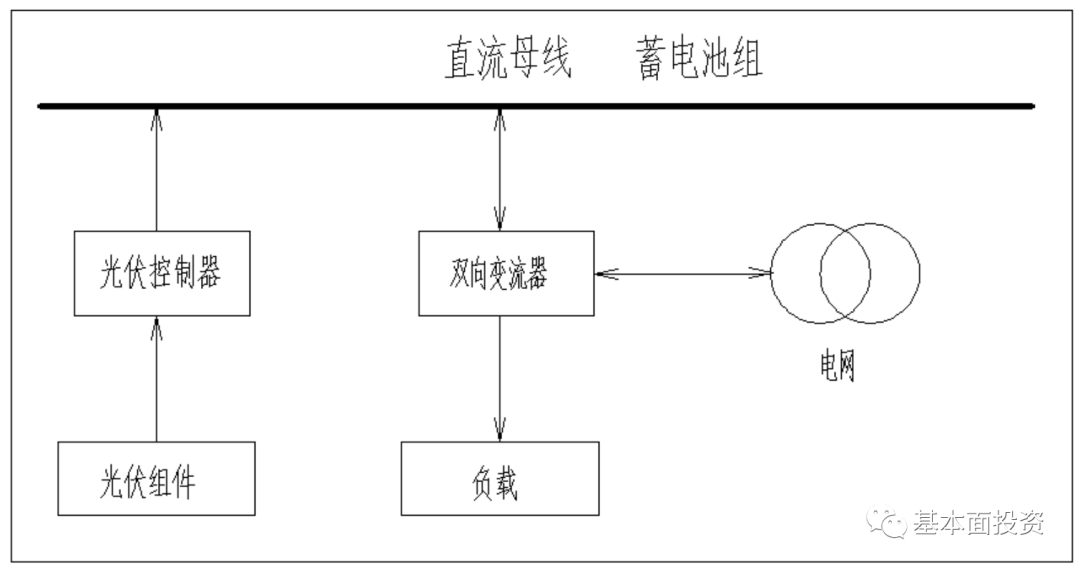
A hybrid photovoltaic (PV) + energy storage system involves the direct current (DC) electricity generated by PV modules being stored in a battery bank via a controller. The grid can also charge the battery bank via a bidirectional DC-AC converter. The energy collection point is at the DC battery terminal. During the day, PV power first supplies the load, and then charges the battery bank via an MPPT controller. The energy storage system is connected to the grid, and excess power can be fed into the grid. At night, the battery discharges to supply the load, and any shortfall is supplemented by the grid. When the grid experiences a power outage, PV power and the lithium battery only supply power to off-grid loads; grid-connected loads are unusable. When the load power exceeds the PV power output, both the grid and PV can supply power to the load simultaneously. Because neither PV power generation nor load power consumption is stable, the battery bank is used to balance the system's energy. Furthermore, the system allows users to set charging and discharging times to meet their electricity needs.
Working Principle of DC-DC Coupled System
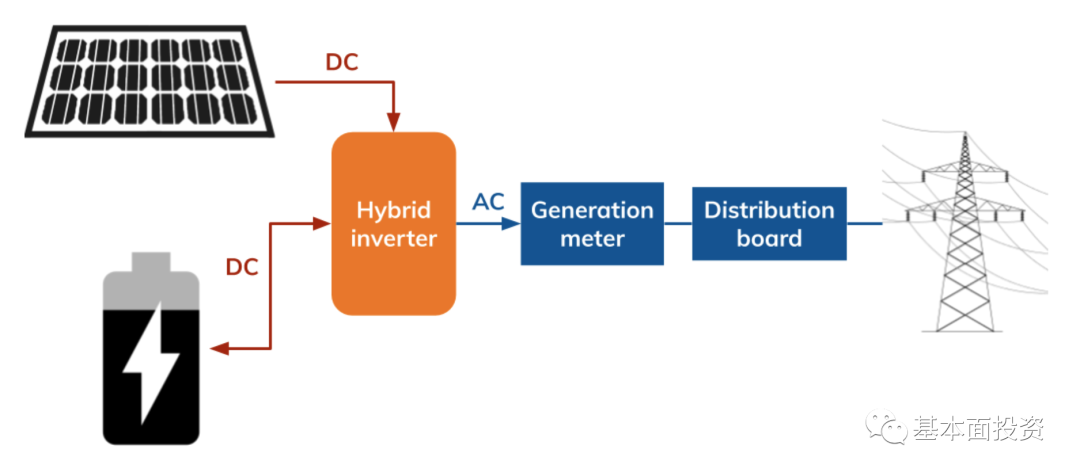
Source: Spirit Energy, Haitong Securities Research Institute
Hybrid Photovoltaic + Energy Storage System
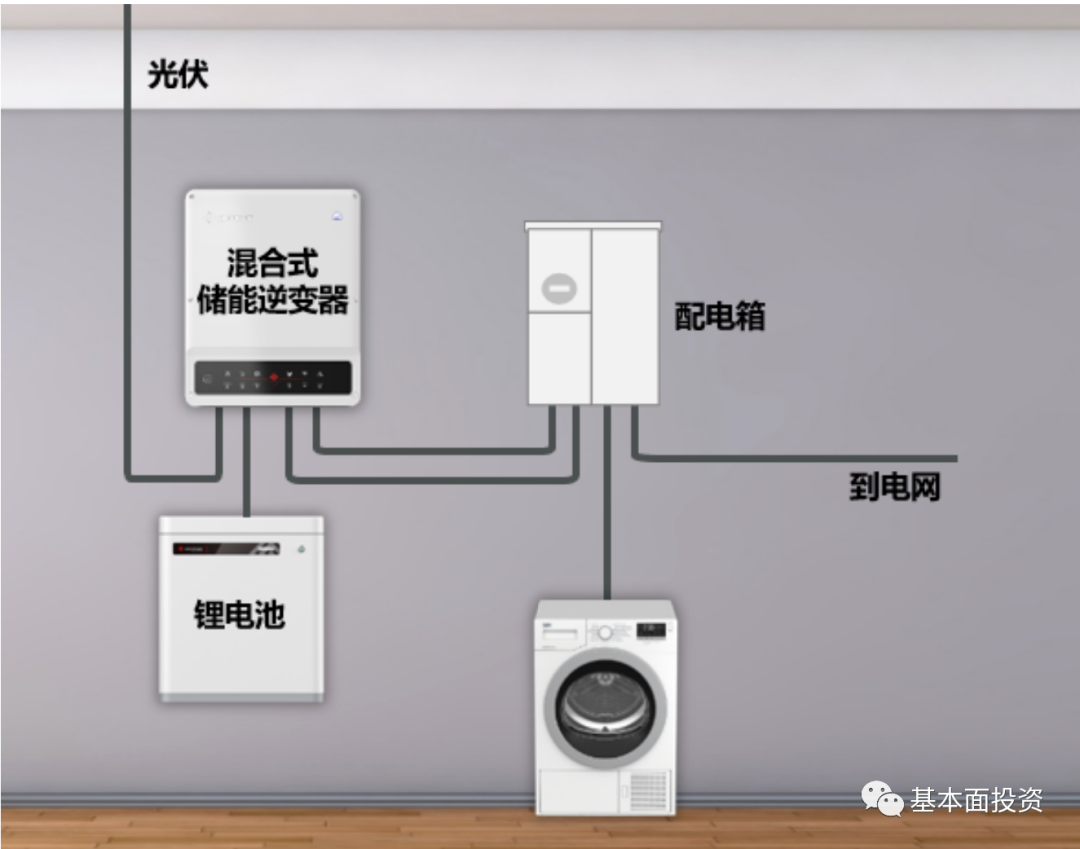
Source: GoodWe PV Community, Haitong Securities Research Institute
Hybrid inverters integrate off-grid and grid-connected functions, improving charging efficiency. Grid-connected inverters automatically shut off power to the solar panel system during power outages for safety reasons. Hybrid inverters allow users to have both off-grid and grid-connected capabilities simultaneously, thus providing power even during power outages. Hybrid inverters simplify energy monitoring, allowing users to check important data such as performance and energy production through the inverter panel or connected smart devices. If the system has two inverters, they must be monitored separately.
DC coupling reduces losses during AC-DC conversion. Battery charging efficiency is approximately 95-99%, while AC coupling is 90%. Hybrid inverters are economical, compact, and easy to install. Installing a new hybrid inverter with DC-coupled batteries can be cheaper than retrofitting AC-coupled batteries into an existing system because controllers are cheaper than grid-connected inverters, and switching switches are cheaper than distribution cabinets. DC-coupled solutions can also be made into integrated control and inverter units, saving on both equipment and installation costs. DC-coupled systems are particularly cost-effective for small to medium power off-grid systems. Hybrid inverters are highly modular, making it easy to add new components and controllers. Additional components can be easily added using relatively low-cost DC solar controllers. Furthermore, hybrid inverters are designed to integrate storage at any time, making it easier to add battery packs. Hybrid systems are more compact, use high-voltage batteries, and have smaller cables with lower losses.
DC Coupling System Composition
Source: Zhongrui Lighting Network, Haitong Securities Research Institute
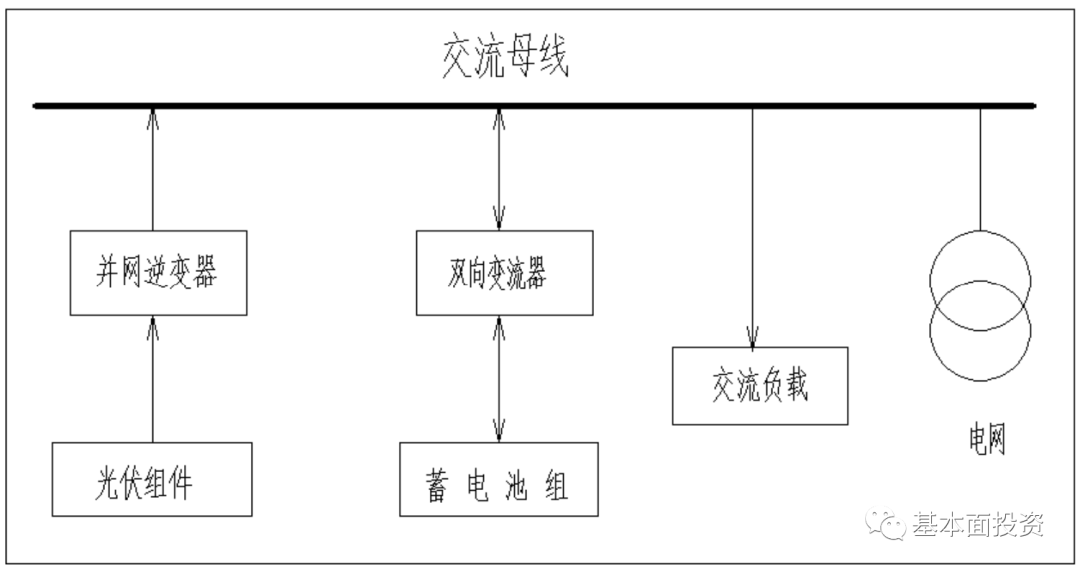
AC Coupling System Composition
Source: Zhongrui Lighting Network, Haitong Securities Research Institute
However, hybrid inverters are not suitable for upgrading existing solar systems, and higher-power systems are complex to install and expensive. If users want to upgrade their existing solar systems to include battery storage, choosing a hybrid inverter may complicate matters, while a battery inverter may be more cost-effective because installing a hybrid inverter requires a complete and expensive rework of the entire solar panel system. Higher-power systems are more complex to install and more expensive due to the need for more high-voltage controllers.
If electricity consumption is high during the day, efficiency will slightly decrease due to the DC (PV) to DC (batt) to AC conversion. A coupled photovoltaic (PV) + energy storage system, also known as an AC-to-DC PV + energy storage system, converts the DC power generated by PV modules into AC power via a grid-connected inverter. Then, an AC-coupled energy storage inverter converts excess power back into DC power for storage in batteries. The energy collection point is at the AC end. It includes a PV power supply system and a battery power supply system. The PV system consists of a PV array and a grid-connected inverter, while the battery system consists of battery banks and a bidirectional inverter. These two systems can operate independently without interference, or they can be separated from the main grid to form a microgrid system.
Working Principle of AC Coupled Systems
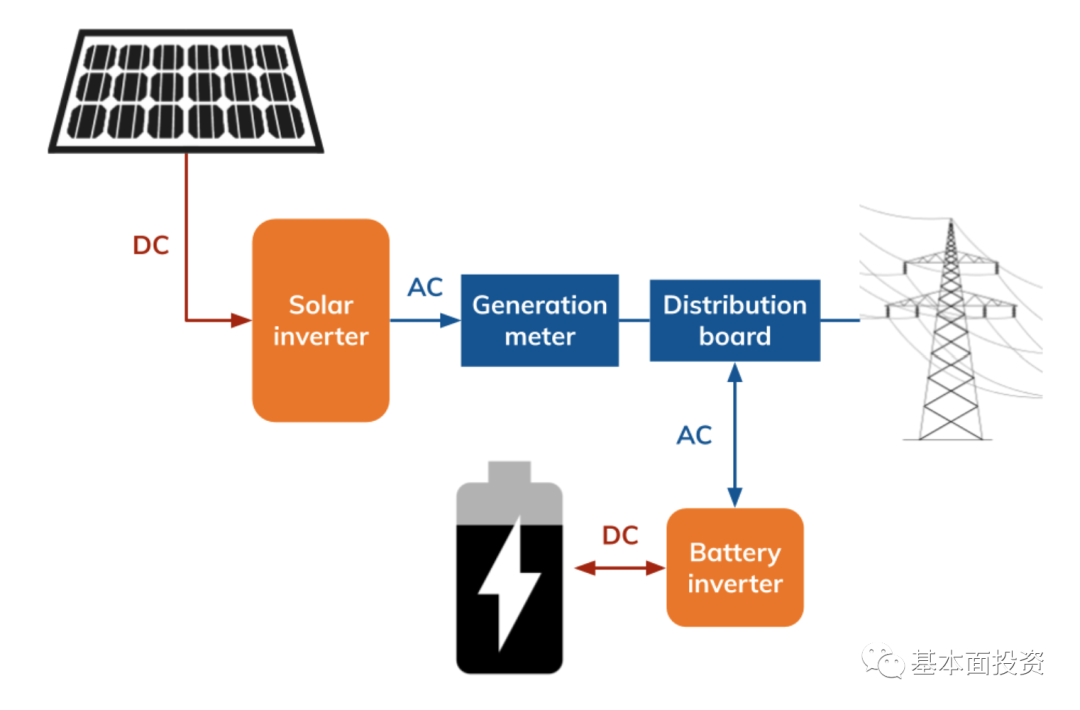
Source: Spirit Energy, Haitong Securities Research Institute
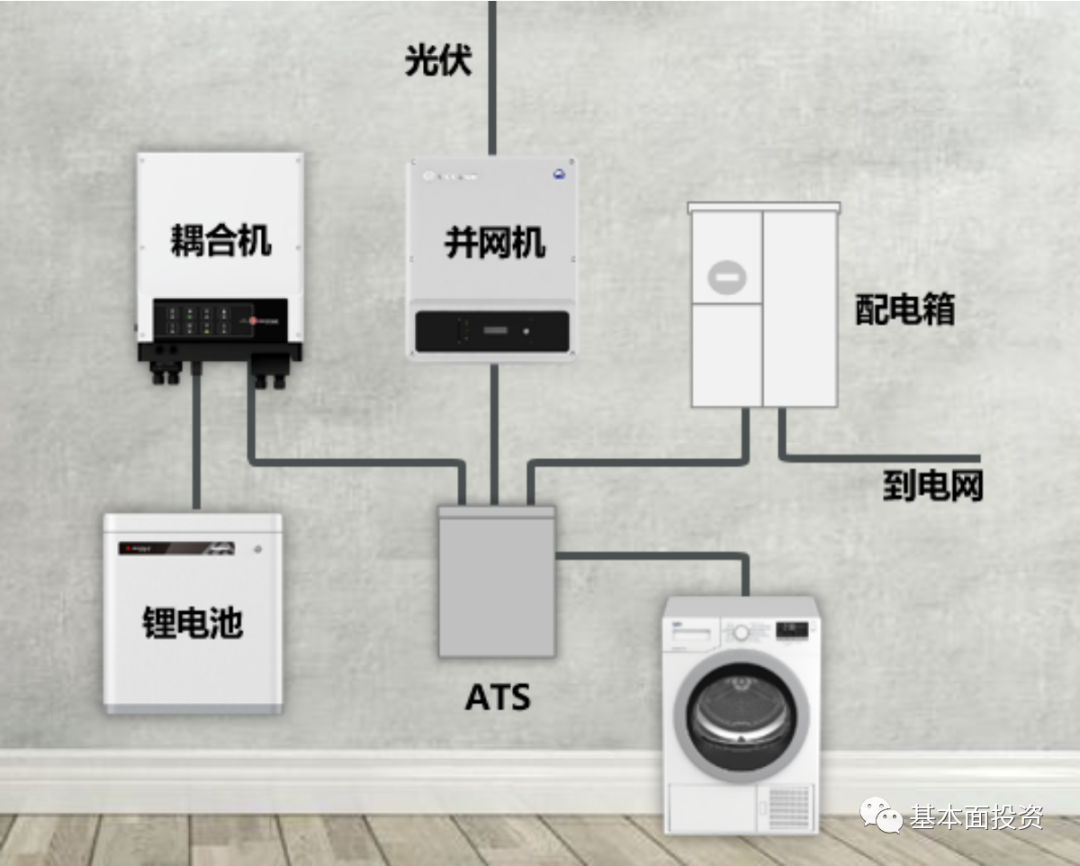
Coupled Residential Photovoltaic + Energy Storage System
Source: GoodWe PV Community, Haitong Securities Research Institute
AC-coupled systems are 100% compatible with the grid, easy to install, and easily expandable. Standard residential installation components can be used, and even relatively large systems (2kW to MW level) are easily expandable, and can be used in combination with grid-connected and stand-alone generator sets (diesel generators, wind turbines, etc.). Most string solar inverters above 3kW have dual MPPT inputs, so long strings of panels can be installed in different directions and tilt angles.
AC coupling charging efficiency is lower and more expensive for small systems. In AC coupling, energy entering the battery must be converted twice, and then again when the user starts using the energy, adding more losses to the system. Therefore, when using a battery system, AC coupling efficiency drops to 85-90%. AC coupling inverters are more expensive for small systems.
Off-grid residential PV + energy storage systems generally consist of PV modules, lithium batteries, off-grid energy storage inverters, loads, and diesel generators. This system can directly charge the battery via DC-DC conversion from PV, or it can achieve bidirectional DC-AC conversion for battery charging and discharging. During the day, PV power first supplies the load and then charges the battery; at night, the battery discharges to supply the load, and when the battery is insufficient, the diesel generator supplies the load. It can meet the daily electricity needs of areas without a power grid. It can be combined with a diesel generator to supply the load or charge the battery.
Most off-grid energy storage inverters lack grid connection certification, meaning they cannot connect to the grid even if the system has one.
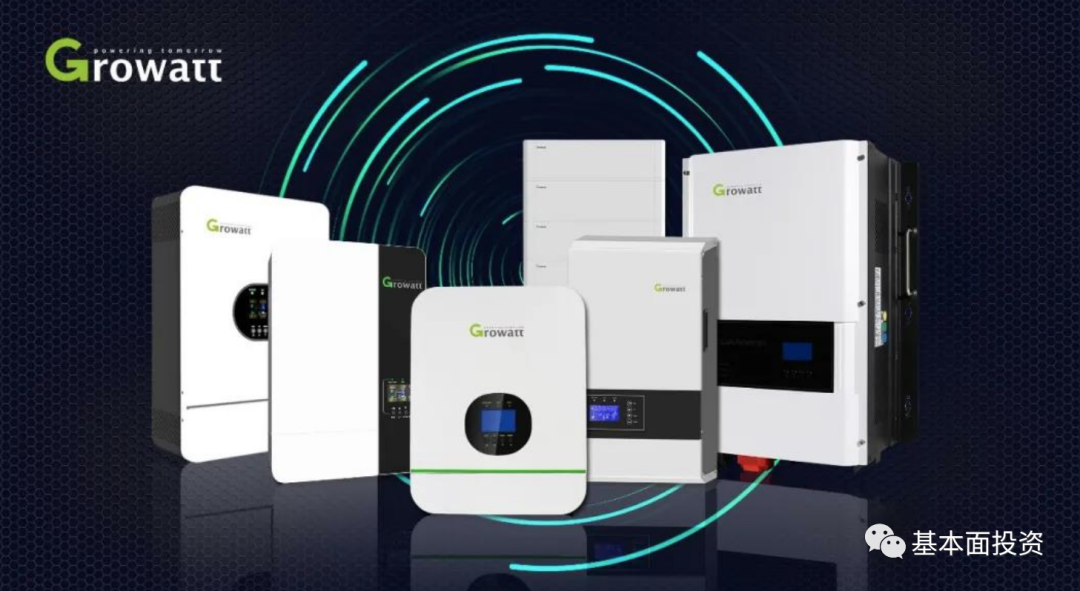
Source: Growatt official website, Haitong Securities Research Institute
Off-grid residential PV + energy storage system