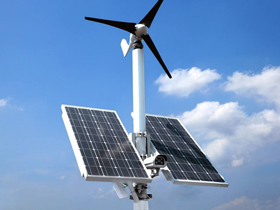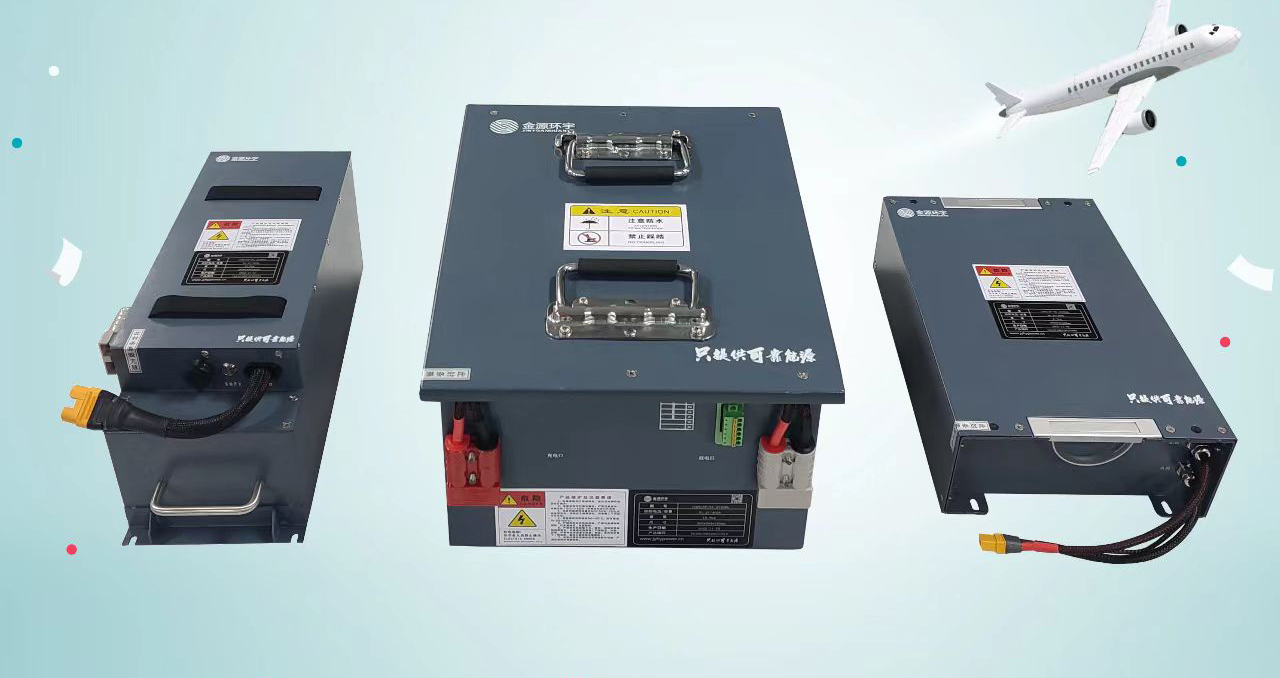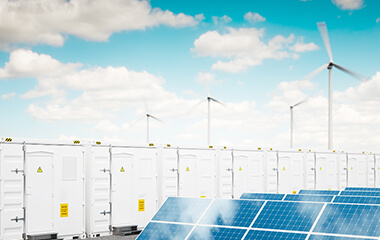
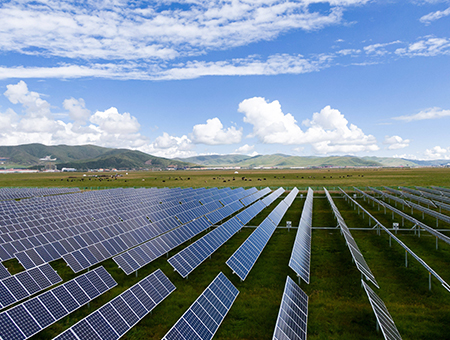
A solar photovoltaic power generation system consists of three parts: solar cell modules; power electronic equipment such as charge and discharge controllers, frequency converters, testing instruments, and computer monitoring; and batteries or other energy storage and auxiliary power generation equipment. Solar photovoltaic (PV) power generation systems have the following characteristics: No rotating parts, no noise; No air pollution, no wastewater discharge; No combustion process, no fuel required; Simple maintenance, low maintenance cost; High operational reliability and stability; Long lifespan of solar cells is a key component of solar cells; crystalline silicon solar cells can last for more than 25 years; Scaling up power generation as needed is easy. PV systems have wide applications, and their basic forms can be divided into two main categories: stand-alone power generation systems and grid-connected power generation systems. Major application areas include space shuttles, communication systems, microwave relay stations, television differential turntables, photovoltaic pumps, and power supply for areas without electricity and for homes. With technological advancements and the need for sustainable global economic development, developed countries have begun systematically promoting urban photovoltaic (PV) grid-connected power generation, primarily through the construction of residential rooftop PV systems and MW-level centralized large-scale grid-connected power generation systems. The use of solar PV systems is being vigorously promoted in transportation and urban lighting. PV systems vary in scale and application, ranging from large-scale systems like 0.3-2W solar garden lights to MW-level solar PV power plants, such as 3.75kWp residential rooftop power generation equipment and the 10MW project in Dunhuang. Their applications are diverse, widely used in homes, transportation, communications, aerospace, and other fields. Although PV systems differ in size, their composition and working principles are basically the same. PV module matrix: Solar cell modules (also known as photovoltaic cell modules) are formed by connecting them in series and parallel according to system requirements, converting solar energy into electrical energy output under sunlight. It is the core component of a solar PV power generation system. Battery: Stores the energy generated by the solar cell modules. When sunlight is insufficient, at night, or when the load demand exceeds the power generated by the solar cell modules, the stored energy is released to meet the load's energy requirements. This is the energy storage capability of a solar photovoltaic system. Currently, solar photovoltaic systems are widely used in lead-acid batteries. For high-demand systems, deep discharge valves are typically used to regulate sealed lead-acid batteries and deep discharge suction lead-acid batteries. Controller: Regulates and controls the charging and discharging state of the battery, controlling the power output of the solar cell modules and batteries to the load according to the load's power demand. It is the core control part of the entire system. With the development of the solar photovoltaic industry, the functions of controllers are becoming increasingly powerful, with a trend towards combining traditional control parts, inverters, and monitoring systems. For example, the AES SPP and SMD series controllers integrate the above three types of controllers. Inverter: In a solar photovoltaic power system, if an AC load is included, the inverter device converts the DC power generated by the solar cell modules or the DC power released by the batteries into the AC power required by the load.
The basic working principle of a solar photovoltaic (PV) power supply system is that a rechargeable battery, controlled by a controller, meets the load demand under conditions of sunlight illumination or direct power supply to the load. If sunlight is insufficient or at night, the battery is controlled by the controller. For PV systems with AC loads, an inverter is also required to convert DC power to AC power. There are many applications of PV systems, but the basic principles are similar. For other types of PV systems, only the control mechanism and system components differ according to actual needs.