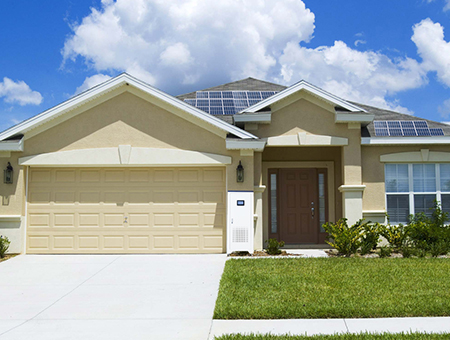
After the market frenzy of 2022, the residential energy storage market has begun to stabilize. According to data from GGII (Gaogong Industry Research Institute of Energy Storage), residential energy storage battery shipments in the first half of 2023 were approximately 6 GWh, with full-year forecasts significantly lowered.
In the first half of this year, the European market, the world's largest residential energy storage market, suddenly cooled down, leading to a large backlog of inventory and impacting the performance of residential energy storage battery and system integrators. At the same time, the number of new entrants surged, intensifying competition in the residential energy storage sector.
Therefore, in order to seek new growth points, residential energy storage companies have launched global roadshows and are continuously expanding into high-end markets outside Europe, such as North America, Japan, and Australia, as well as lower-tier markets such as South Africa, Southeast Asia, and South America. In terms of technology, sodium batteries and solid-state batteries have become the "new favorites" for residential energy storage companies. In terms of business, residential energy storage companies are actively developing industrial and commercial energy storage and large-scale energy storage products.
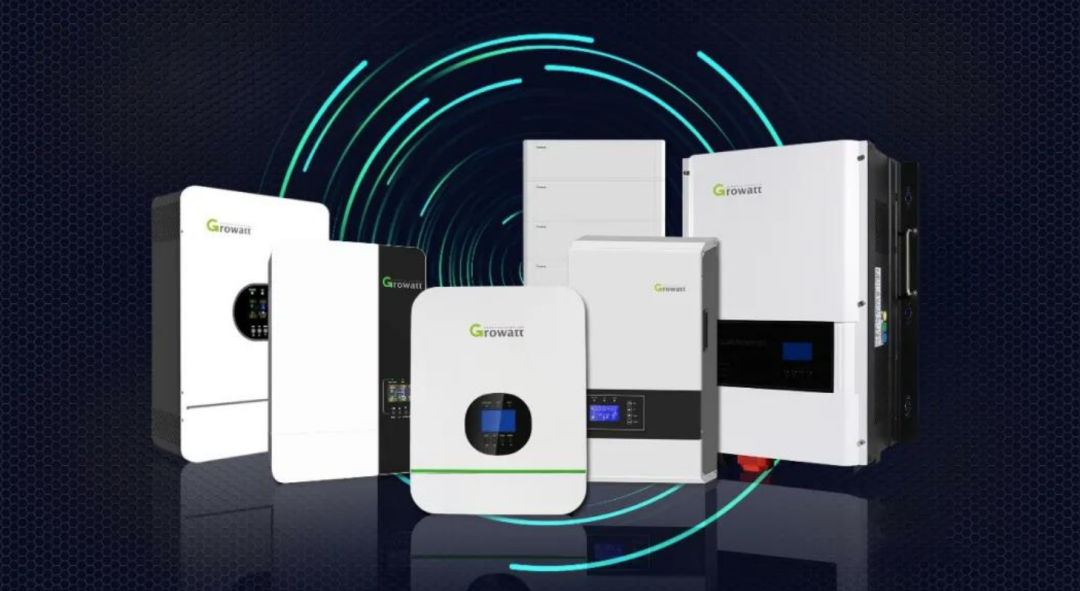
The global market is undergoing rapid changes: Europe is cooling, South Africa is booming, and the US may take the lead.
According to relevant data, global new residential energy storage capacity reached 15.6 GWh in 2022, a year-on-year increase of 136.4%. Germany, the US, Japan, Italy, and Australia ranked in the top five for new residential energy storage capacity in 2022, with these five countries accounting for over 10 GWh of new installations, representing more than 70% of the global market.
The European market saw approximately 5.7 GWh of new residential energy storage capacity installed in 2022, a year-on-year increase of 147.6%, accounting for a significant 36.4% of the global market. Germany, Italy, the UK, and Austria ranked as the top four markets in Europe, with 1.54 GWh, 1.1 GWh, 0.29 GWh, and 0.22 GWh respectively. In addition, Poland, Spain, and Sweden are emerging markets with considerable potential, with Poland and Sweden expected to become the top four in the European market by 2026.
In 2022, the US added 12.12 GWh of energy storage capacity, of which residential energy storage accounted for 1.51 GWh, or 12.43%. In the first quarter of 2023, the US residential energy storage market reached 155.4 MW/388.2 MWh, representing year-on-year growth of 7%/36%, but also the first decline in six consecutive quarters.
Looking at the new residential energy storage capacity in 2022, the US is now close to Germany. With the easing of the European energy crisis, demand for residential storage is slowing. In the long term, the US may replace Germany as the world's largest residential energy storage market, making it a worthwhile market to develop.
Japan has a high residential energy storage penetration rate, second only to Germany. In 2021, Japan's after-meter energy storage capacity was 931 MWh, and the proportion of energy storage in photovoltaic systems was 20.7%, with residential energy storage accounting for approximately 90% of after-meter energy storage. Sungrow Power, Jinko Solar, Canadian Solar, and Huawei have all developed products specifically for the Japanese market.
According to a report by Australia's SunWiz, Australia deployed 589 MWh of residential battery energy storage systems in 2022, a year-on-year increase of 55%.
It is worth noting that emerging markets such as South Africa and Southeast Asia are experiencing a surge in demand for energy storage due to their urgent need for new energy sources and energy storage to help solve power shortages.
H1 Performance: A Mixed Bag
Looking at the H1 revenue of listed companies, almost all companies saw positive growth in both revenue and profit in the first half of 2023, suggesting that the residential energy storage sector is currently enjoying a relatively peaceful period. However, breaking down the H1 performance into Q1 and Q2 reveals the impending challenges.
Looking at Q1 alone, companies such as Powertech, Deye, Goodwe, KSTAR, and Hema all saw revenue growth exceeding 100% year-on-year. However, due to supply chain constraints and a shortage of installation workers in 2022, many unfulfilled orders were carried over to 2023. Furthermore, the revenue recognition of companies in Q1 has a certain lag, meaning that the performance in Q1 2023 was largely influenced by the market conditions in Q4 2022.
Therefore, the year-on-year growth rate of the aforementioned companies declined rapidly in Q2, with the highest growth rate for Deye Shares falling to 83.3%. In addition to the slowdown in growth, both Powerenergy Technology and Chint Electric saw declines in both revenue and profit in Q2, both year-on-year and quarter-on-quarter. Ginlong Technologies and Hema Shares also experienced quarter-on-quarter revenue declines in Q2, reflecting the cooling market in their Q2 reports.
Many players in the residential energy storage sector are from other fields, primarily inverter and battery companies. Powerenergy Technology has the largest share of its business in energy storage. Pylontech was the global leader in residential energy storage systems in 2022, shipping 1.39 GWh in H1, a year-on-year increase of 15%. However, Q2 revenue declined by 31.09% quarter-on-quarter due to inventory reduction by European distributors, reflecting the cooling of the European residential energy storage market since the beginning of the year.
Enphase, a US-based energy storage company, saw its Q1 residential energy storage battery shipments drop to 102.4 MWh from 122.1 MWh in Q4 2022. It projects Q2 shipments of 80-100 MWh, marking the third consecutive quarter of decline in its energy storage business.
However, in contrast to the gloomy performance of battery companies, energy storage inverter companies experienced significant shipment growth. GoodWe's H1 revenue increased by 162.61% year-on-year, and its profit increased by 1256.2%, making it the fastest-growing listed residential energy storage company. Deye Shares, GoodWe, Hopewind Electric, and KSTAR also performed well in overseas markets.
In terms of energy storage inverter shipments, Deye Technology shipped 299,700 units in the first half of the year, generating revenue of 2.5 billion yuan, a year-on-year increase of 291.8%; GoodWe shipped 119,400 units in the first half, accounting for 28.47% of total revenue; Ginlong Technologies' energy storage inverter revenue in the first half was 311.9 million yuan, accounting for 9.59% of total revenue. Chint Electric's energy storage and inverter business revenue in the first half was 590 million yuan, a year-on-year increase of 46.58%, accounting for 3.6%. In addition, GoodWe's energy storage battery sales were approximately 240.38 MWh, and Deye Technology's energy storage battery revenue reached 438 million yuan, becoming a new profit growth point.
KSTAR's new energy photovoltaic and energy storage business achieved operating revenue of 1.497 billion yuan in the first half of the year, a year-on-year increase of 290.96%. Hopewind Electric's energy storage installations in the first half of the year have exceeded the cumulative total of all previous years. Xiangxin Technology's energy storage and photovoltaic inverter business is steadily improving.
It's worth noting that the energy storage business still accounts for a relatively small percentage of the total revenue for companies like GoodWe, Deye, Hopewind, KSTAR, and Chint Electric.
Among inverter companies, Growatt has a high proportion of energy storage business, reaching 40.3% in 2022. At the end of May, Growatt announced that it was postponing its IPO plans due to a challenging market environment. According to foreign media reports, Growatt's planned IPO fundraising has been reduced from $1 billion last year to $300-400 million.
With the cooling of the overseas residential energy storage market, industry consolidation is accelerating. Coupled with the tightening of IPOs, this may mean further obstacles for some companies' listing journeys. At this crucial juncture of vying for market share and securing key positions, the ability to successfully complete an IPO and obtain financing may become the key to a company's survival in the fierce competition.
Intensified Market Competition: Four Strategies for Residential Energy Storage Companies
With a surge in new entrants and weak downstream demand, the residential energy storage market is facing intensified competition, declining profit margins, and the days of easy profits are over. As the market enters a "red ocean," most companies in the sector are responding in the following ways:
1. Inverter Companies Accelerate Integrated Development to Improve Product Profit Margins
Residential energy storage is a photovoltaic-energy storage system centered on batteries and inverters. Inverter companies, due to their channel and brand advantages, hold a dominant position in the industry chain.
From the perspective of inverter companies' financing and capacity expansion, integration has become the only option for many. Batteries account for 45-50% of energy storage systems, and related development helps to further improve product profit margins. Tongrun Equipment, Deye Shares, Growatt, Goodwe, Airo Energy, Wotai Energy, and Maitian Energy have all targeted the energy storage battery and system business.
II. Expanding Business Scope: Targeting the Industrial and Commercial Energy Storage Market and Large-Scale Energy Storage
Faced with the slowdown in the overseas residential energy storage market, residential energy storage companies have turned their attention back to the domestic market, making the rapidly growing industrial and commercial energy storage market and large-scale energy storage a natural choice.
Almost all residential energy storage companies have launched industrial and commercial energy storage solutions. Companies such as Powertech, Daqin Digital Energy, KSTAR, Goodwe, Growatt, Deye, Sanjing Electric, Wotai Energy, Ginlong Technologies, and Shouhang New Energy have successively released integrated industrial and commercial energy storage units/cabinets. Wotai Energy's IPO fundraising also includes a project to build an industrial park with an annual production capacity of 4,000 sets of industrial and commercial energy storage.
The large-scale energy storage market is a fiercely contested battleground for domestic energy storage companies. In 2023, several residential energy storage companies launched new large-scale energy storage products. Among them, Shouhang New Energy released the centralized energy storage system solution SOFAR Power Master in May of this year, and Goodwe also launched the UTILITY SOLUTIONS ground-mounted power station solution. Furthermore, Pylontech is focusing on breaking into the large-scale energy storage system market, having launched a high-capacity, long-life aluminum-cased energy storage battery at the end of 2022 and successfully commercialized it.
III. New Technology Deployment: Sodium Batteries and Solid-State Batteries Hold Promising Future
Residential energy storage companies are turning their attention to sodium batteries and solid-state batteries.
As early as January 2022, the world's first sodium-ion battery-based home energy storage system officially debuted at CES in Las Vegas. This product, designed by BLUETTI, is equipped with a sodium battery independently developed by Zhongke Haina.
Pylontech and Huawei are both investing in sodium batteries through their subsidiaries. On March 3, Pylontech announced that its wholly-owned subsidiary, ZTE Pylontech, plans to build a 1GWh sodium-ion battery project in Jiangsu Province, with a total investment of 220 million yuan and an estimated construction period of 6 months. On June 9, Pylontech announced its investment in Zhongna Energy. Pylontech's sodium battery products have obtained authoritative certifications from UL (USA), IEC (International Electron Devices), and TÜV Rheinland (Germany). Currently, it is accelerating the demonstration of residential and commercial energy storage products and has reached testing agreements with numerous customers.
In April 2022, Hubble Technology (a subsidiary of Huawei) became a new shareholder of Zhongke Haina, contributing RMB 4.13 million, representing 13.3% of the shares, becoming Zhongke Haina's third-largest shareholder.
In February 2023, Daqin New Energy and Haisida jointly signed a "Strategic Cooperation Framework Agreement" to conduct in-depth exchanges and R&D cooperation on the application of lithium-ion and sodium-ion batteries in residential and commercial energy storage systems.
In July, Penghui Energy announced the mass production of sodium batteries. The company and some customers are exploring the application of sodium ions in the residential energy storage field. Far East Battery also revealed that it expects to officially launch a sodium-ion battery residential energy storage system by the end of this year or next year.
In addition, regarding semi-solid-state batteries, in August 2022, Zendure held a production launch ceremony for its new home energy storage product, SuperBase V, with an annual production capacity of 70,000 units. SuperBase V uses semi-solid-state batteries, with customizable capacities ranging from 6.4kWh to 64kWh. In the same month, Hybostron also developed a new generation of HyperSafe series solid-state battery energy storage systems for different application scenarios, including residential, energy storage power stations, and industrial and commercial applications.
IV. Opening Up New Markets: Looking Towards the US, South Africa, and Southeast Asia
As the second largest market outside of Europe, the US residential energy storage market is mainly dominated by overseas giants such as Tesla, Enphase, LG, SolarEdge, and SMA America. Tesla holds more than half of the market share, while Sungrow Power's share in 2022 was approximately 3%, and it is continuously expanding.
Chinese residential energy storage companies are flocking to the US market. At the RE+ North American exhibition in September, over 100 Chinese energy storage companies showcased their products, including Sanjing Electric and Maitian Energy, which exhibited energy storage products specifically developed for the US market. It's worth noting that most Chinese companies enter the US market through OEM manufacturing; to truly establish themselves, they need not only robust hardware but also to enhance their "soft power" by integrating new technologies such as virtual power plants.
Africa and Southeast Asia, due to their underdeveloped and weak power infrastructure, represent a significant untapped market.
Deye Energy mentioned in its semi-annual report that South Africa experienced power shortages in the first half of 2023, leading to a surge in demand for residential energy storage. The company's revenue from energy storage inverters increased substantially, and it has already established overseas subsidiaries in South Africa and Germany to strengthen its promotion in these markets.
Penghui Energy stated on July 16th that the vast majority of its residential energy storage cells are used overseas, with good progress in the South African market. Residential energy storage is already selling well, and large-scale energy storage is expected to see gains soon. On September 14th, Boliway also mentioned that the South African energy storage market experienced explosive growth in the first half of the year, with the company's residential energy storage business achieving high growth. However, with the influx of more and more energy storage manufacturers, competition in the South African energy storage market is also intensifying. Ginlong Technologies, on the other hand, launched a new independent power supply enhanced version of its energy storage inverter for the South African and Southeast Asian markets.
In Southeast Asia, inverter companies such as KSTAR, Growatt, Shouhang New Energy, Sungrow Power, Goodwe, Ginlong, Deye, Sungrow Power Supply, Growatt, and Hema have established factories or branches in Southeast Asia to build sales channels. In the battery sector, CATL, EVE Energy, SVOLT Energy, Guoxuan High-Tech, and Blue Ocean Battery have also established factories in Thailand, Vietnam, Malaysia, and other locations.
For these companies, this allows them to enter the Southeast Asian market locally and also "circumvent" the IRA Act, thereby expanding into the global market.
Source: GGII Energy Storage


.jpeg)