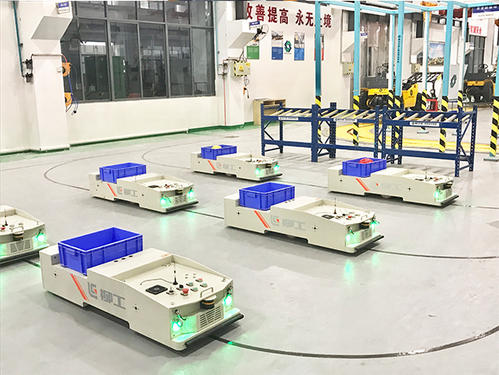
In the daily use of mobile robots, battery accuracy is a crucial indicator. However, many users find that the SOC (State of Charge) display on their mobile robots is not always accurate. In some cases, severe SOC fluctuations can even lead to malfunctions and shutdowns. The main reasons for inaccurate battery display are the method of SOC calculation and the quality of the battery cells.
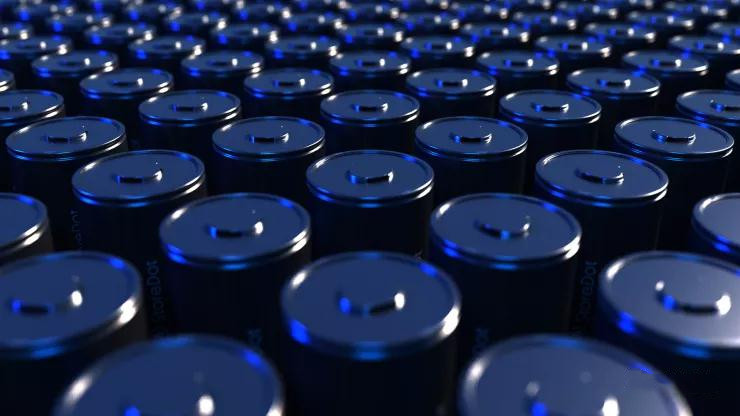
Common ways to obtain battery SOC:
1. Battery Management System (BMS): A BMS is a system specifically designed to monitor and manage batteries. It can calculate SOC by measuring parameters such as battery voltage, current, and temperature using specific algorithms. A BMS can also consider battery characteristics and historical data to provide a more accurate SOC estimate.
2. Open Circuit Voltage Measurement: After the battery has been left to rest for a period of time, the open circuit voltage of the battery is measured.
6. Internal Resistance Measurement: There is a certain relationship between the battery's internal resistance and its State of Charge (SOC). By measuring the battery's internal resistance, the SOC can be indirectly estimated. However, the internal resistance measurement method may be affected by factors such as battery temperature and lifespan.
It should be noted that different SOC acquisition methods may have different accuracies and applicable ranges. In practical applications, multiple methods are usually used in combination to improve the accuracy of SOC estimation.

Cell quality leads to inaccurate SOC:
1. Cell consistency: If there are quality differences between cells, such as differences in capacity, internal resistance, or self-discharge rate, this may lead to inconsistent SOC among the individual cells in the battery pack. SOC calculation is usually based on the entire battery pack, but quality differences may make the SOC estimate of individual cells inaccurate.
2. Capacity decay: Poor cell quality may lead to faster capacity decay, which will cause deviations in SOC estimation.
If the cell capacity decreases, the SOC indicator may still show a high charge level even after the battery pack has been discharged. 3. Internal Resistance Changes: Cell quality issues can cause an increase in internal resistance. Increased internal resistance leads to increased energy loss during charging and discharging, thus affecting the accuracy of the SOC. 4. Temperature Sensitivity: Some cells may be more sensitive to temperature, which affects cell performance and SOC calculation. If the cell quality is poor, temperature changes may lead to larger errors in the SOC calculation. 5. Data Acquisition Errors: Poor cell quality can lead to inaccurate data acquisition related to SOC, such as voltage, current, or temperature. Inaccurate data will affect the accuracy of the SOC algorithm. To improve SOC accuracy, it is necessary to select reliable battery cells and adopt an appropriate battery management system to monitor and correct the cell status. Furthermore, accurate SOC algorithms and calibration processes also help reduce errors. The stability and consistency of cell quality are crucial for ensuring the accuracy of SOC estimates, which is of great significance to battery performance, lifespan, and safety. To improve the accuracy of SOC (State of Charge) power measurement, we can take the following measures:2. Improve the accuracy of current recognition in the battery management system, ensuring it can accurately obtain the battery's consumed or replenished energy parameters. Optimize the battery management system's algorithm to improve its precision and accuracy.
3. Regularly calibrate or grade the battery during full charge to ensure the battery management system can accurately estimate the battery capacity.
Jinyuan Huanyu focuses on customized lithium battery development for various scenarios in the mobile robot industry, using passenger car-grade A-grade battery cells as power sources. The battery cell supply chain is traceable, thus ensuring quality and service. The company has been in the battery industry for 18 years, and its vision is to become China's No.1 robot power supply system integrator.
Any questions are welcome for consultation and discussion.
.jpg)