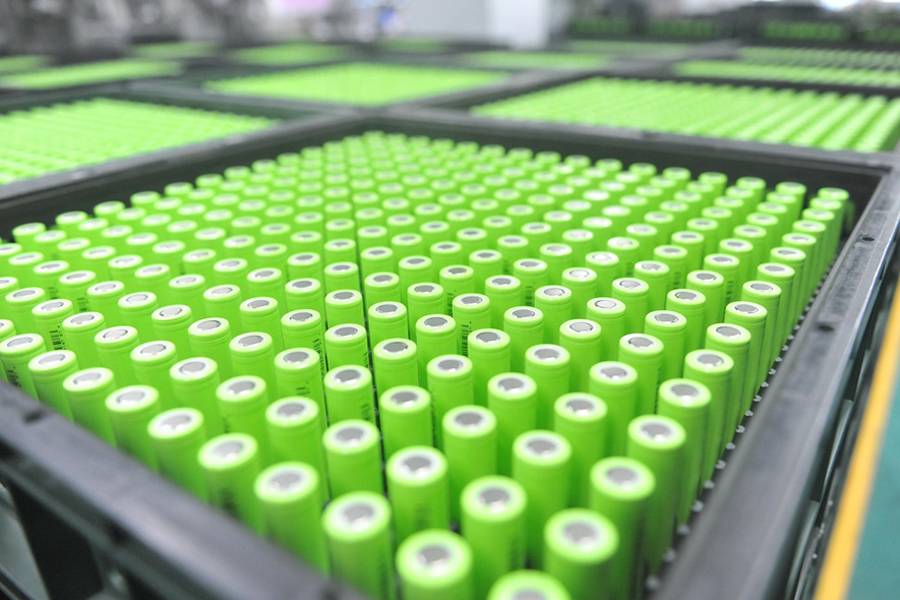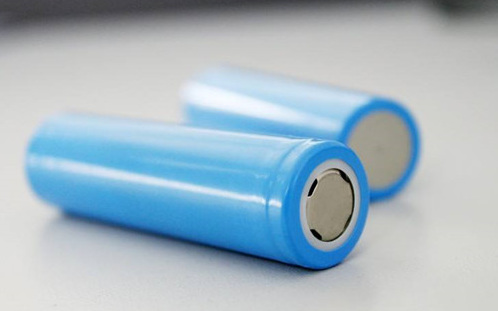
The lithium batteries we see—cylindrical, pouch, and prismatic—generally have a sleek appearance, completely unlike the bulky traditional lead-acid batteries. Why is that?
High energy density means lithium batteries are often designed with limited capacity. Lead-acid batteries have an energy density of around 40Wh/kg, while lithium batteries exceed 150Wh/kg. Increased energy density leads to higher safety requirements.
First, a single lithium battery with excessively high capacity can experience thermal runaway in the event of an accident. The battery's internal reaction is rapid, and the excess energy has nowhere to be released in a short time, which is extremely dangerous. Especially when safety technologies and control capabilities are not yet fully developed, the capacity of each battery should be carefully controlled. Second, the energy encased in the lithium battery casing is inaccessible to firefighters and extinguishing agents in the event of an accident. The only recourse is to isolate the scene and allow the battery to burn out naturally. Of course, for safety reasons, current lithium batteries are designed with multiple safety features.
Safety Valve: When the internal reaction of the battery exceeds the normal range, the temperature rises, and side reaction gases are generated, and the pressure reaches the design value, the safety valve automatically opens to release the pressure. The moment the safety valve opens, the battery completely fails.
Thermistor: Some batteries are equipped with a thermistor. Once an overcurrent occurs, the resistance increases sharply after reaching a certain temperature, the current in the circuit decreases, and the temperature is prevented from rising further.
Fuse: Batteries are equipped with fuses that have overcurrent protection. Once an overcurrent risk occurs, the circuit is broken to prevent catastrophic accidents.
Lithium-ion Battery Consistency Issues
Lithium-ion batteries cannot be made into a single large unit, so many small cells are organized together, working in unison to power electric vehicles. This leads to the issue of consistency.
Our everyday experience is that connecting two dry cell batteries, positive and negative terminals together, will make a flashlight light up; who cares about consistency? However, the large-scale application of lithium-ion batteries presents a different challenge.
Inconsistencies in lithium battery parameters mainly refer to inconsistencies in capacity, internal resistance, and open-circuit voltage. Using inconsistent cells in series and parallel will lead to the following problems:
1) Capacity Loss: As individual cells form a battery pack, the capacity follows the "barrel principle," where the capacity of the weakest cell determines the overall capacity of the battery pack.
To prevent overcharging and over-discharging of the battery, the battery management system (BMS) is configured as follows: During discharge, the entire battery pack stops discharging when the lowest-capacity individual cell reaches the discharge cutoff voltage; during charging, charging stops when the highest-capacity individual cell reaches the charging cutoff voltage. Take two batteries connected in series as an example. One battery has a capacity of 1C, and the other only 0.9C. In series, both batteries carry the same amount of current. During charging, the battery with the smaller capacity will inevitably be fully charged first, reaching the charging cutoff condition, and the system will stop charging. During discharging, the battery with the smaller capacity will also inevitably discharge all available energy first, and the system will immediately stop discharging.
In this way, the smaller capacity cells are always fully charged and discharged, while the larger capacity cells are always using only part of their capacity. A portion of the entire battery pack's capacity is always idle.
2) Lifespan Loss Similarly, the lifespan of the battery pack is determined by the cell with the shortest lifespan. It's highly likely that the cell with the shortest lifespan is the smaller capacity cell. The smaller capacity cell is always fully charged and discharged, resulting in excessive power output, and it's very likely that it will reach the end of its lifespan first. When one cell reaches the end of its lifespan, the entire group of cells soldered together also reaches the end of its lifespan.
3) Increased internal resistance: With the same current flowing through cells of different internal resistances, cells with higher internal resistance generate relatively more heat. Excessive battery temperature accelerates degradation, further increasing internal resistance. Internal resistance and temperature rise form a negative feedback loop, accelerating the degradation of high-internal-resistance cells.
The above three parameters are not entirely independent. Cells with deeper aging have higher internal resistance and greater capacity decay. Explaining them separately is simply to clarify their respective effects.
How to deal with inconsistencies
Inconsistencies in cell performance are formed during the production process and worsen during use. Within the same battery pack, weaker cells remain weaker and their weakness accelerates. The degree of parameter dispersion between individual cells increases with aging.
Currently, engineers address inconsistencies in individual battery cells primarily from three aspects: individual battery sorting, thermal management after grouping, and balancing functions provided by the battery management system when minor inconsistencies occur.
Cells from different batches should theoretically not be used together. Even cells from the same batch need to be screened, with cells having relatively similar parameters placed in the same battery pack.
The purpose of sorting is to select battery cells with similar parameters. Sorting methods have been studied for many years and are mainly divided into two categories: static sorting and dynamic sorting. Static sorting focuses on screening battery cells based on their open-circuit voltage, internal resistance, capacity, and other characteristic parameters. Target parameters are selected, statistical algorithms are introduced, screening criteria are set, and finally, battery cells from the same batch are divided into several groups. Dynamic screening focuses on the characteristics exhibited by battery cells during charging and discharging. Some cells are selected based on constant current and constant voltage charging processes, some on pulse impact charging and discharging processes, and some on the relationship between their own charging and discharging curves.
A combination of static and dynamic sorting is used. Static screening is used for initial grouping, followed by dynamic screening. This results in more groups and higher screening accuracy, but the cost will increase accordingly.
This highlights the importance of scale in lithium battery production. Large-scale shipments allow manufacturers to perform more refined sorting, obtaining battery packs with more similar performance. If production volume is too small and there are too many groups, even a single batch cannot equip a battery pack, rendering even the best methods ineffective.
Addressing the issue of inconsistent internal resistance in battery cells leading to varying heat generation.
The addition of a thermal management system can regulate the temperature difference across the entire battery pack, keeping it within a relatively small range. Cells that generate more heat will still experience a higher temperature rise, but the difference won't be significant compared to other cells, thus preventing a noticeable difference in degradation levels.