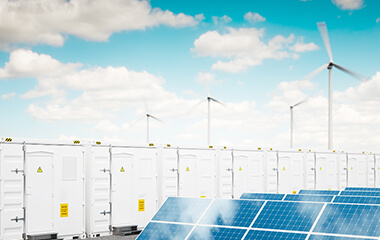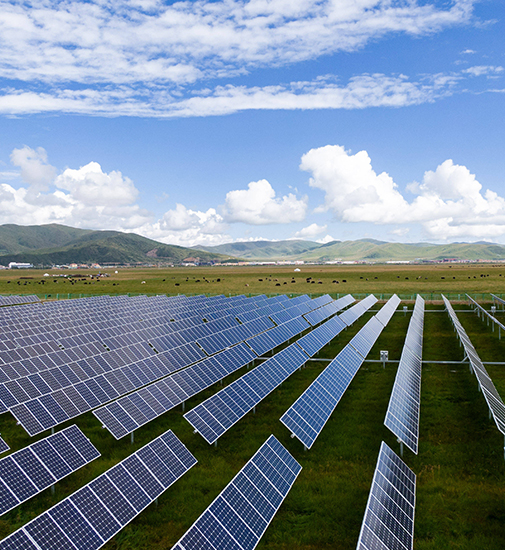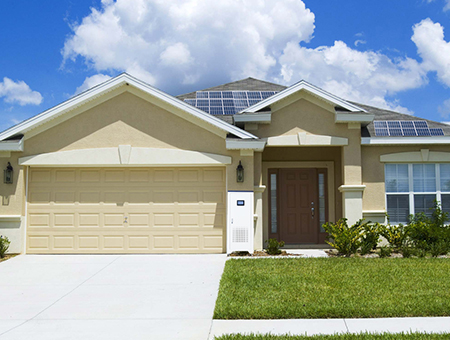
The "new three pillars" of foreign trade have seen robust growth again.
Recently, Shanghai, Fujian, Zhejiang, Guangdong, and other regions have released export data for products including lithium batteries, electric vehicles, and solar cells. Data from Fuzhou Customs shows that in the first half of this year, Fujian Province's lithium battery exports reached 57.07 billion yuan, a year-on-year increase of 110.7%, achieving double-digit growth in the EU and ASEAN regions. Data from Shanghai Customs shows that Shanghai ports exported 47.5 billion yuan worth of lithium batteries in the first half of this year, a year-on-year increase of 60.9%.
According to the latest data from the General Administration of Customs, in the first seven months of this year, my country's total lithium battery exports increased by 58.9% year-on-year.
The continuously expanding share of China's lithium battery exports also indicates that Chinese lithium battery companies are accelerating their overseas expansion to seize global market share. To date, more than ten lithium battery giants, including CATL, Zhongchuang Innovation Aviation, SVOLT Energy, Guoxuan High-Tech, Envision Power, EVE Energy, and Sunwoda, have invested in and built factories overseas.
Amid the global shift from old to new growth drivers in the new energy industry, the lithium battery industry, represented by China, has become a crucial pillar of energy transformation, empowering vehicle electrification and driving the rapid development of new energy storage technologies.
From an export perspective, lithium batteries are performing strongly in Europe, America, and Southeast Asia. This stems from the strong support policies for the new energy industry in these regions in recent years, coupled with convenient transportation networks and supporting localization efforts, attracting numerous overseas companies.
However, it is worth noting that in addition to markets like Europe, America, and Southeast Asia, lithium battery exports are also performing exceptionally well in African markets, represented by South Africa and Nigeria. Taking Zhejiang Province as an example, its lithium battery exports to Africa reached 1.19 billion yuan from January to July this year, a year-on-year increase of 262.9%.
In South Africa, companies such as SVOLT Energy, Powertech, Ginlong Technologies, and Deye Group have successively entered the market, driving the rapid development of the South African household energy storage market.
The African market, in terms of investment environment and infrastructure, has long been a blind spot for the development of the lithium battery industry.
In the past, the African market has primarily been viewed by lithium battery companies as a source of raw materials. Huayou Cobalt acquired the Arcadia lithium mine project at the end of 2021, with a planned annual lithium ore processing capacity of 2.4 million tons and an estimated annual production of 147,000 tons of lithium concentrate. Ganfeng Lithium holds the Goulamina lithium mine project, with lithium resources of 109 million tons and a lithium content of 19.67 million tons (LCE). The project commenced construction in June 2022 and is expected to be operational in 2024.
From a resource perspective, Africa possesses enormous potential reserves in lithium and phosphate deposits. Zimbabwe alone has proven lithium LCE of 3.67 million tons. Morocco and Western Sahara in Africa are the world's largest phosphate mining areas, accounting for over 40% of global reserves. Abundant lithium and phosphate resources facilitate the local integration of the lithium battery industry, reducing raw material costs.
Furthermore, southern African countries rely heavily on oil imports. The increasing use of electric vehicles is expected to reduce African countries' dependence on oil, thereby conserving hard-earned foreign exchange reserves.
From the perspective of growing lithium battery exports, the African lithium battery market should not be underestimated. Data shows that the African automotive market is projected to reach $39.87 billion by 2026. From an electrification perspective, Africa's electric vehicle ownership is very low, indicating that the African electric vehicle industry is in its very early stages. In contrast, the growth of two-wheeled and three-wheeled electric vehicles in Africa is relatively rapid.
Furthermore, Africa serves as a transit point for entering the European market. Many European and American automakers have established factories in Africa. Driven by the electrification wave in Europe, more and more African countries are recognizing the importance of vehicle electrification and have introduced relevant policies.
The three major African automotive producing countries—South Africa, Morocco, and Egypt—have already set an example.
South Africa has launched a green transportation strategy, planning to increase the number of charging stations and proposing the localization of electric vehicles and components production.
Egypt plans to build 42,000 charging stations nationwide within 18 months starting April 2022 and invest 2.5 billion Egyptian pounds (approximately 600 million RMB) in building domestic electric vehicle production lines.
Morocco has also proposed a plan to double its electric vehicle production capacity by 2023-2024, increasing its annual electric vehicle production to over 100,000 vehicles.
As Africa improves its policies and infrastructure, its transition to electrification will gradually begin.