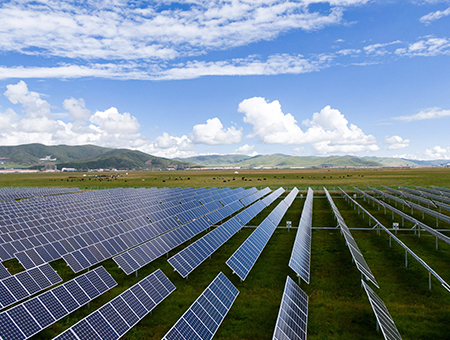
This year, the distributed photovoltaic (PV) market has been plagued by numerous irregularities, such as developers focusing on concentrated installations in a few areas for profit, inconsistent construction quality of PV projects, and serious issues with falsified data by PV companies. To regulate the PV market, relevant departments in many regions have suspended the registration of distributed PV projects and issued related policies. Industry experts and business leaders suggest that it is necessary to increase basic-level power distribution capacity and strengthen top-level policy design to promote the healthy development of the industry.
After years of development, the PV industry has become a calling card of China's manufacturing sector. However, this year, the distributed PV market has seen numerous irregularities. In some areas, due to excessively rapid installation and large-scale installations coupled with insufficient grid capacity, distributed PV registration has been suspended, impacting industry operations and investor confidence.
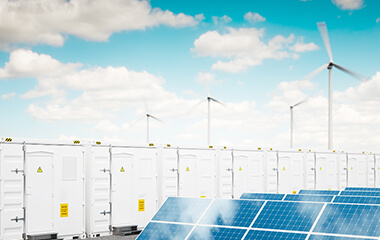
In response, authoritative experts suggest accelerating the transformation of the power distribution network to increase distribution capacity; simultaneously, promoting the "centralized consolidation + energy storage" model in suitable areas. In the long term, it is also necessary to promote coordinated development among energy authorities, power grid departments, and large local electricity consumers, strengthening top-level design to create a better development environment for distributed PV.
Market Chaos Abounds
Multiple Regions Suspend Distributed Photovoltaic Project Registration
In late August of this year, Hubei Province issued a "Notice on Strengthening the Whole-Process Management of Distributed Photovoltaic Power Generation Projects (Draft for Comments)". While the document outlined numerous measures favorable to distributed photovoltaics, it also stipulated that "in counties (cities, districts) with a low-voltage distribution network connection warning level of red, the registration of distributed photovoltaic power generation projects will be suspended from the date of the announcement."
Previously, the Yingkou Municipal Development and Reform Commission of Liaoning Province had issued a "Notice on Relevant Work Concerning the Registration of Distributed Photovoltaic Projects" (hereinafter referred to as the "Notice") to the Yingkou Municipal Bureau of Business Environment, the development and reform bureaus of various counties (cities) and districts, and the power supply companies. The notice states that, according to the "Report on the Assessment of Distributed Power Generation Grid Connection Capacity of State Grid Liaoning Electric Power Co., Ltd." (Liaoning Electric Power Control [2022] No. 60), the new distributed power generation capacity in Yingkou area is 981.97MW. However, statistics show that from January 2022 to May 2023, the registered but not yet connected photovoltaic capacity in Yingkou area has reached 1527.06MW, far exceeding the area's grid connection capacity.
The notice further states that if all existing registered distributed photovoltaic projects were connected to the grid, the assessment level of four areas—Laobian District, Bayuquan District, Dashiqiao City, and Gaizhou City—would be rated as red. Therefore, considering the actual situation of Yingkou area's grid connection capacity of 981.98MW and the actual registered project capacity of 1527.06MW, it has been decided to temporarily suspend the registration of new fully distributed photovoltaic projects throughout the city. The reopening date will be announced separately.
According to the "Guidelines for Assessing the Grid Capacity of Distributed Power Sources" (DL/T2041-2019) issued by the National Energy Administration, "if distributed power sources cause backfeeding to the 220kV and above power grid, the assessment level is red, and the connection of new distributed power source projects should be suspended until the grid capacity is effectively improved."
Further back, on May 29th of this year, the Hunan Provincial Development and Reform Commission explicitly halted the registration of "full grid connection" small-scale ground-mounted photovoltaic power station projects, stating that they must be incorporated into the province's overall construction plan and registered by the Development and Reform Commission according to its management authority before construction can commence.
In June, the official website of the Shaanxi Provincial Development and Reform Commission disclosed that someone had sent a letter suggesting that photovoltaic registration in Pucheng County be suspended. The letter stated that speculators in Pucheng County were pursuing profits and disrupting the photovoltaic market. It suggested that the county's Development and Reform Commission should quickly develop a rectification plan and corresponding policy guidance, and issue corresponding documents and measures to regulate the photovoltaic market and promote its healthy and orderly development. In response, the Shaanxi Provincial Development and Reform Commission stated that, according to its investigation, over 140 photovoltaic (PV) companies have entered Pucheng County in the past two years. The construction quality varies greatly, and residents have repeatedly complained about leaky roofs, lack of maintenance after installation, and PV revenue failing to cover loan payments. Furthermore, most PV companies are constructing projects under the names of individuals rather than individuals, leading to serious issues such as falsified documentation. In light of these circumstances, Pucheng County is currently rectifying the chaotic state of the PV industry.
On June 7th, the Guangdong Provincial Energy Bureau stated that, in principle, the power grid company will not dispatch or purchase electricity from new energy projects that have not met the required storage requirements. Other reports indicate that the Guangdong Provincial Energy Bureau has ordered a suspension of project approvals for ground-mounted centralized PV and onshore wind power projects effective immediately; projects already approved but not yet started are to be postponed. The New Energy Division of the Guangdong Provincial Energy Bureau responded that project approvals have not been suspended, but rather that companies are advised not to submit new registrations or approvals.
On July 4th, the Guangdong Provincial Energy Bureau issued a reply to Proposal No. 20230152 from the First Session of the 13th Guangdong Provincial Committee of the Chinese People's Political Consultative Conference, proposing multiple measures to address the practical problems currently existing in the development of distributed photovoltaic (PV) systems in the province.
On June 8th, the Development and Reform Bureau of Liaozhong District, Shenyang City, issued an emergency notice, again suspending the registration, acceptance, and grid connection of PV projects.
On June 11th, the General Office of the Henan Provincial People's Government issued an implementation opinion stating that projects without energy storage cannot be connected to the grid, and those failing to meet standards will have twice their grid-connected capacity deducted.
In response to the chaotic situation in distributed PV systems, Dezhou, Shandong Province, recently issued a "Notice on Further Improving the Grid Connection and Operation of Distributed PV Systems," and the Hunan Provincial Development and Reform Commission also issued a "Notice on Further Regulating the Development and Construction of Distributed PV Systems in the Province," both stipulating that residential PV rooftop rentals should be managed as industrial and commercial projects.
Project registration is the preliminary stage of PV power station development, and the Development and Reform Commission's registration document is one of the essential conditions for PV power stations to connect to the power system. Typically, only after power plant developers complete the registration process can other necessary procedures for construction commence. The registered scale can also be seen as a comprehensive arrangement for the development of new energy sources such as wind and solar power in the local area.
However, with the abrupt halt in policy, some regions have seen cases where installed residential solar panels cannot be connected to the grid, forcing the equipment to be scrapped. It is reported that some farmers spent hundreds of thousands of yuan installing solar panels, only to have them removed and sold to secondhand recyclers for tens of thousands of yuan after just two days.
Residential Solar Installations Grow Too Rapidly
Lagging Grassroots Power Distribution Infrastructure
Since the beginning of this year, the price of the photovoltaic supply chain has experienced a rapid decline. Wang Bohua, honorary chairman of the China Photovoltaic Industry Association, stated that since the beginning of the year, the price of the photovoltaic supply chain has experienced a brief rebound followed by a continuous decline, with the fastest-declining segment seeing a drop of over 78% from last year's peak price.
The rapid decline in prices at each stage has stimulated downstream installation demand. A representative from Jinko Solar told the Shanghai Securities News that the price decline in the photovoltaic industry chain will have a positive impact on the development and operation of downstream power plants, and the demand for photovoltaic installations at the end-user level is expected to be further released. The corresponding decrease in cost factors will improve project profitability.
Against this backdrop, the installed capacity of residential photovoltaic (PV) systems has grown rapidly this year. On July 27th, the National Energy Administration released its report on PV power generation construction and operation in the first half of 2023, showing that in the first six months of this year, newly installed distributed PV capacity reached 40.963 million kilowatts, once again exceeding the newly installed centralized capacity (37.46 million kilowatts). Of this, residential installations accounted for more than half, reaching 21.522 million kilowatts, approaching the level of 25.252 million kilowatts for the whole of 2022, and almost on par with the whole of 2021. A prominent problem brought about by this rapid growth in installed capacity is a significant lack of grid integration capacity.
"This problem is partly caused by insufficient local transformer capacity, and partly by insufficient transformer capacity due to low electricity consumption, ultimately forcing the power to be fed back into the grid," said a renewable energy policy research expert in Beijing in an interview. He added that residential PV systems are now quite large, with a single system often reaching 20 to 30 kilowatts. Based on a distribution capacity of 3 kilowatts per household, 80% of the capacity can be connected to distributed photovoltaic (PV) systems. However, if 10% of households in a village install distributed PV systems, the capacity will be insufficient.
The expert stated that, on the one hand, developers, driven by profit, have aggressively promoted distributed PV installations in the past two years, prioritizing provinces with high returns on investment and concentrating mainly in a few regions. Last year, the national residential PV capacity exceeded 25 million kilowatts, but it was concentrated in only a few provinces, certainly exceeding the grid capacity. On the other hand, residential PV has a "neighborhood effect"—villagers in a village either don't install it at all, or after a few households install it and find it profitable, everyone wants to install it, leading to grid connection problems as the number of households increases.
In his view, the county-wide development model raises the installation threshold, but its drawback is excessive concentration, making the aforementioned areas more prone to capacity shortages.
"Many developed countries abroad practice self-consumption, building residential solar PV systems and then adding their own energy storage. Overseas, a single household typically installs 2 or 3 kilowatts, at most 5 kilowatts, adjusting the amount based on their needs. However, in China, developers, aiming to maximize profits, often install 20 or 30 kilowatts for residential systems, which can never meet the demand," said the expert.
The expert stated that the residential model has an upper limit; even if the grid capacity catches up with that of developed countries in the future, it can only meet the needs of 20% to 30% of rural households. For example, if a household installs 20 kilowatts, only 30% of farmers can do it; if a household installs 30 kilowatts, only 20% can do it. "This is an upper limit."
"This problem has occurred before in provinces with large distributed photovoltaic installations, such as Shandong, Henan, and Hebei. To ensure electricity safety, these provinces have issued policies requiring that the scale of household photovoltaic installations cannot exceed 80% of the transformer capacity; otherwise, grid connection will be impossible. Recently, the National Energy Administration also issued a policy requiring pilot areas to conduct grid connection capacity assessments for distributed photovoltaic systems and classify them into red, yellow, and green zones based on the results," said Wang Shujuan, a photovoltaic expert and founder of Zhihui Photovoltaic.
Ding Wenlei, chairman of Shandong Hangyu Solar Energy Technology Co., Ltd., one of the earliest private enterprises engaged in distributed photovoltaic business in China, told reporters that distributed photovoltaics face many constraints, especially in the central and eastern regions where electricity consumption is high, and the disorderly development in previous years has led to many problems." In his view, the current restrictions or suspensions on distributed photovoltaic (PV) registration in many provinces and cities are partly due to overloaded transformer capacity, partly due to local governments' fear of grid problems leading to a blanket suspension, and even partly due to local governments using PV as a bargaining chip for attracting investment.
Experts suggest increasing distribution capacity
Strengthening top-level design
Regarding solutions, the aforementioned renewable energy policy research expert stated that the first step is to upgrade the distribution network and increase its capacity. If there is electricity available at the 110kV level, support could be given to the reasonable allocation of energy storage on the distribution network side, through electricity market transactions, time-of-use pricing, etc. If the local centralized PV capacity is high, the absorption of centralized and distributed PV must be planned in a coordinated manner, improving absorption capacity through various means such as flexible transformation of thermal power plants and electrochemical methods.
He stated that with the national policies of rural revitalization and promoting new energy vehicles in rural areas, there is already a need to increase the capacity of grassroots distribution networks, not to mention that the connectable capacity of residential PV can also be increased through this.
Wang Shujuan stated that to improve the carrying capacity of distributed generation, besides upgrading the distribution network, expanding the absorption range is the fastest solution. This requires raising the voltage level, expanding the current absorption range from 380V to 10kV.
"However, expansion cannot be unlimited; further expansion would exceed the standards of developed countries, which would be wasteful. Therefore, centralized collection is the next step," the expert suggested. Suitable regions could adopt Shandong's centralized collection model, aggregating the electricity generated by all residential photovoltaic systems, building their own collection lines, and then constructing a separate step-up transformer for centralized collection, treating it as a true industrial and commercial distributed power station.
Recently, Shandong has been exploring a "centralized collection + energy storage" solution, which involves stepping up the voltage of residential photovoltaic systems in a region to 10kV and configuring shared energy storage at the distribution area. This will, to some extent, solve the problem of insufficient low-voltage carrying capacity. The decrease in component prices can fully cover the increased costs of this approach.
Ding Wenlei believes that top-level design should be strengthened to ensure coordinated development among energy authorities, power grid companies, and major local electricity consumers. This would involve planning, implementation, supervision, and services, forming a three-in-one or even four-in-one integrated photovoltaic development system, leading to a healthier future for the photovoltaic industry.
"Only by leveraging the planning functions of local energy authorities and the informational advantages of local power grid companies regarding local electricity load, and ensuring full collaboration between the two sides, can the industry truly achieve practical significance," Ding Wenlei said.
He believes that in economically developed regions like the central and eastern parts of China with high electricity consumption, distributed photovoltaic development will continue to accelerate. The government should promote the standardization and orderly development of the industry through more market-oriented means. A grid-based management approach could also be adopted for distributed photovoltaics, with major electricity consumers as the primary consideration, making policies more aligned with electricity users.