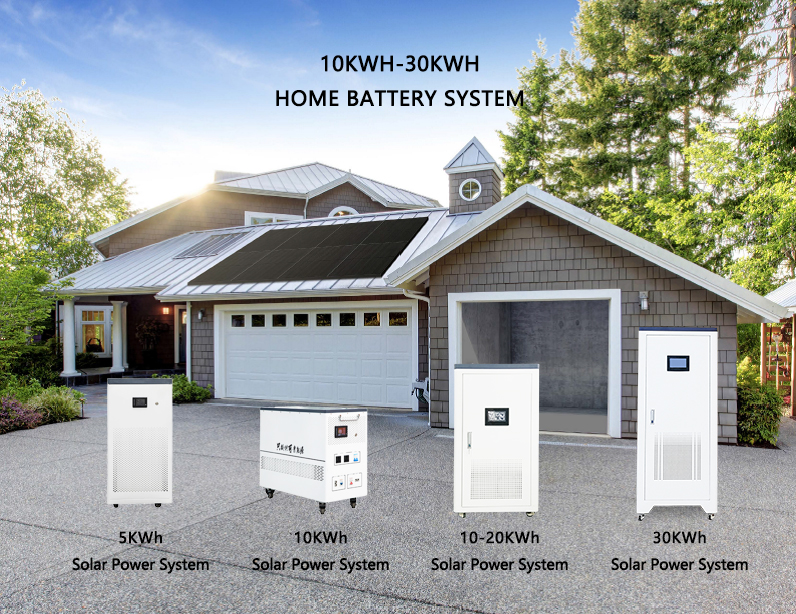
With the increasing popularity of residential solar power, deploying residential energy storage systems has become a major option for homeowners. A recent survey of over 1,500 households by solar power developer SunPower found that approximately 40% of Americans are concerned about frequent power outages. Among respondents actively considering installing residential solar power, 70% indicated plans to include battery energy storage systems.
In addition to providing backup power during power outages, battery energy storage systems integrate technologies that allow for intelligent scheduling of energy inputs and outputs, with the primary goal of maximizing the value of residential solar systems. Furthermore, some battery energy storage systems are optimized to charge electric vehicles.
SunPower's survey report indicates a sharp increase in consumer interest in deploying energy storage systems to achieve self-sufficiency in solar power. Nearly 40% of consumers stated that self-sufficiency in electricity was the primary reason for deploying battery energy storage systems, compared to less than 20% in 2022. Providing backup power and saving on electricity bills were also listed as major reasons for deploying energy storage systems.
According to data released by Lawrence Berkeley National Laboratory, the deployment rate of battery storage systems in residential solar projects has steadily increased, from 8.1% in 2020 to over 17% by 2022.
US Market Share of Energy Storage Manufacturers from the First Half of 2020 to the First Half of 2023
Warranty periods provide insight into the expectations of battery storage system installers and manufacturers regarding battery lifespan. Common warranties are typically around 10 years. For example, Enphase IQ batteries have a 10-year or 7,300 charge-discharge cycle warranty.
Solar power developer Sunrun states that batteries can be used for 5 to 15 years. This means that the battery storage system may need to be replaced once during the 20 to 30-year lifespan of a solar power installation.
Battery lifespan is primarily determined by charge-discharge cycles. As demonstrated in the product warranties of LG and Tesla, 60% or 70% of the capacity threshold can be guaranteed after a certain number of charge-discharge cycles.
The Faraday Institute states that two conditions can lead to battery performance degradation: overcharging and trickle charging. Overcharging can cause it to overheat and even catch fire. Trickle charging refers to the process of continuously charging the battery to 100%, but inevitably involves some loss. This process increases the internal temperature of the battery, reducing capacity and lifespan.
Another reason for battery degradation over time is the loss of lithium ions in the battery electrolyte. Side reactions in the battery trap free, available lithium, gradually reducing battery capacity.
Faraday states that while low temperatures may cause lithium-ion batteries to operate less effectively, they do not shorten the battery's effective lifespan. However, at high temperatures, the overall battery lifespan is shortened because the electrolyte between the electrodes decomposes at high temperatures, reducing the number of lithium ions the electrolyte can hold, thus depleting the capacity of the lithium-ion battery.
Battery Maintenance
The National Renewable Energy Laboratory (NREL) recommends storing batteries in a cool, dry place, ideally in a garage, where the impact of fire can be minimized. Batteries and surrounding components should be properly spaced for cooling, and regular maintenance checks help ensure optimal operation.
The laboratory states that repeated deep discharges should be avoided as much as possible during battery operation, as the more discharges, the shorter the service life. If a residential battery storage system is being deeply discharged daily, it may be time to increase the battery pack size.
The National Renewable Energy Laboratory (NREL) states that connecting batteries in series can maintain charge. While the displayed voltage may be 24V, the voltage between multiple batteries can vary, which is obviously detrimental to the long-term protection of the battery storage system. Furthermore, the correct voltage setpoint should be set for the charger and charge controller; this setpoint is determined by the battery manufacturer.
The NREL also recommends that maintenance personnel should conduct frequent inspections, such as looking for leaks (accumulation on the outside of the battery), checking appropriate fluid levels, and ensuring voltage consistency. Each battery manufacturer may have its own experience and practices, but checking battery maintenance and datasheets is best practice.