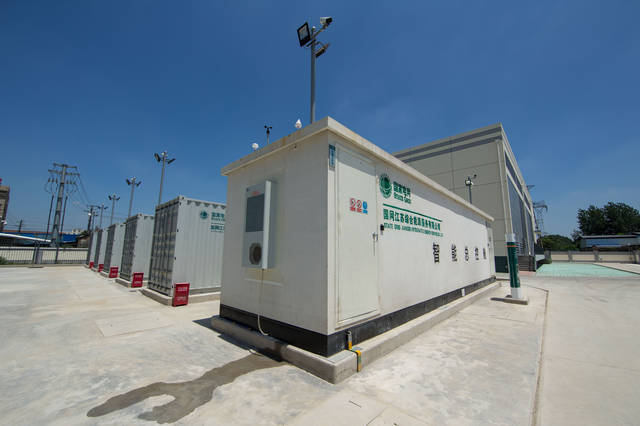
On the morning of November 30th, Jike Development Technology Co., Ltd. (hereinafter referred to as "Jike", stock code: 835579) was officially listed on the Beijing Stock Exchange, marking the company's entry into the capital market and the beginning of a new development milestone.
Jike issued 31.2 million shares in this public offering, bringing its total share capital to 124.8 million shares after the offering. The issue price was 8 yuan per share, raising a total of 250 million yuan. On its first day of trading, the stock opened 212.5% higher, with an intraday high of 256.25%.
Domestic AGV Leader, BYD as its First Customer
Founded in 2002, Jike Technology Co., Ltd. is a leading domestic AGV company, ranking first in China's forklift AGV enterprise competitiveness rankings.
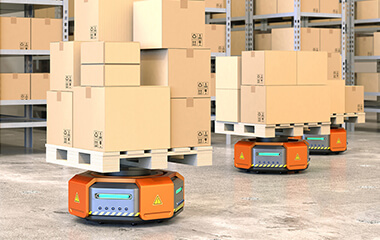
The company belongs to China Academy of Machinery Science & Technology Group Co., Ltd., a central enterprise directly supervised by the State-owned Assets Supervision and Administration Commission of the State Council. It is a comprehensive solution provider focusing on intelligent conveying technology and its high-end supporting equipment, primarily serving the fields of intelligent manufacturing, intelligent environmental protection, and smart healthcare. It provides customers with intelligent conveying systems centered on mobile robots and pneumatic conveying equipment, as well as supporting intelligent equipment and services.
Jike Technology's products are applied in multiple important sectors of the national economy. Its major customers cover automobile manufacturing, metal smelting, rail transportation, construction machinery, biomedicine, petrochemicals, banknote printing and minting, light industry and food, environmental protection, and healthcare, enjoying high brand awareness and influence in its respective domestic industry. Its products are widely used by large clients such as FAW Group, BYD, Baowu Group, Shougang Group, CRRC Group, Sany Heavy Industry, Beijing Tongrentang, Pfizer, China National Petroleum Corporation, China Banknote Printing and Minting Corporation, China Tobacco, Yili Group, and Midea Group.
BYD was the company's largest customer in the first half of this year, generating nearly 50 million yuan in sales revenue, accounting for 31% of total revenue.
From 2020 to 2022, Jike Technology focused on intelligent manufacturing, achieving rapid revenue growth and steadily improving profitability. Revenue CAGR reached 20.14%, and net profit attributable to shareholders CAGR reached 12.59%. In the first half of 2023, Jike Technology achieved revenue of 158 million yuan, a year-on-year increase of 1.84%. From 2019 to the first half of 2023, the company's gross profit margin remained around 25%.
National Team Support: National-Level Funds Appear as Strategic Investors
Regarding strategic placement, Jike Technology introduced China State-owned Enterprise Mixed Ownership Reform Fund Co., Ltd. and CITIC Securities Fund Management Co., Ltd. This is the first time China State-owned Enterprise Mixed Ownership Reform Fund Co., Ltd. has appeared among the existing strategic investors on the Beijing Stock Exchange.
In December 2020, with the approval of the State Council, China State-owned Enterprise Mixed Ownership Reform Fund Co., Ltd., initiated by China Chengtong Holdings Group Co., Ltd. under the entrustment of the State-owned Assets Supervision and Administration Commission of the State Council, was officially established in Shanghai.
The China State-owned Enterprise Mixed Ownership Reform Fund is the third national-level fund established by the State-owned Capital Venture Investment Fund and the China State-owned Enterprise Structural Adjustment Fund, commissioned by the State-owned Assets Supervision and Administration Commission of the State Council to state-owned capital operation companies. It has a total scale of 200 billion yuan and raised 70.7 billion yuan in the first phase. Through market-oriented operation, it will attract various types of social capital to participate in the reform of state-owned enterprises, promote enterprises to improve the modern enterprise system and transform the operating mechanism, and improve the quality and effectiveness of mixed ownership reform.
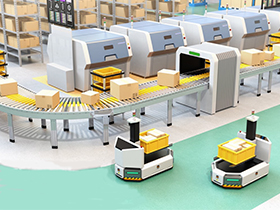
In recent years, the Chinese government has successively introduced relevant policies to realize the strategy of becoming a manufacturing powerhouse. "Made in China 2025" clearly states that the main focus is on accelerating the deep integration of new-generation information technology and manufacturing, with intelligent manufacturing as the primary direction, strengthening basic industrial capabilities, and promoting industrial transformation and upgrading. However, my country's industrial automation still has significant room for improvement, and the penetration rate of automated production lines is far lower than that of traditional industrial powerhouses such as the US, Germany, and Japan. To achieve the manufacturing powerhouse strategy, it is essential to strengthen technological, product, and market capabilities, including core software and hardware products for mobile robots. Given the sheer size of the manufacturing industry, the transformation and upgrading process will generate continuous demand for mobile robots.
Traditionally, mobile robots are mainly used in the 3C electronics, automotive, pharmaceutical, e-commerce retail, and express logistics markets. In recent years, the booming development of emerging industries such as lithium batteries, photovoltaics, and semiconductors has driven a large amount of new product demand. In addition to incremental market demand, the industrial upgrading of downstream industries will also expand the existing market in upstream sectors. As a necessary means to achieve industrial automation, digitalization, and intelligence, the mobile robot industry will benefit from the rapid growth of downstream market demand, achieving continuous growth in market size.
Currently, key domestic mobile robot companies include Hikrobot, Siasun Robot & Automation, Geek+, Quicktron, and HyroRobot. Domestic mobile robot manufacturers have gradually established a presence in the global market and gained a certain market share. However, compared to internationally renowned foreign companies, domestic manufacturers still have significant room for improvement in market share. With continuous innovation in technological research and development and further enhancement of brand awareness, domestic manufacturers are expected to achieve greater export sales in the future.