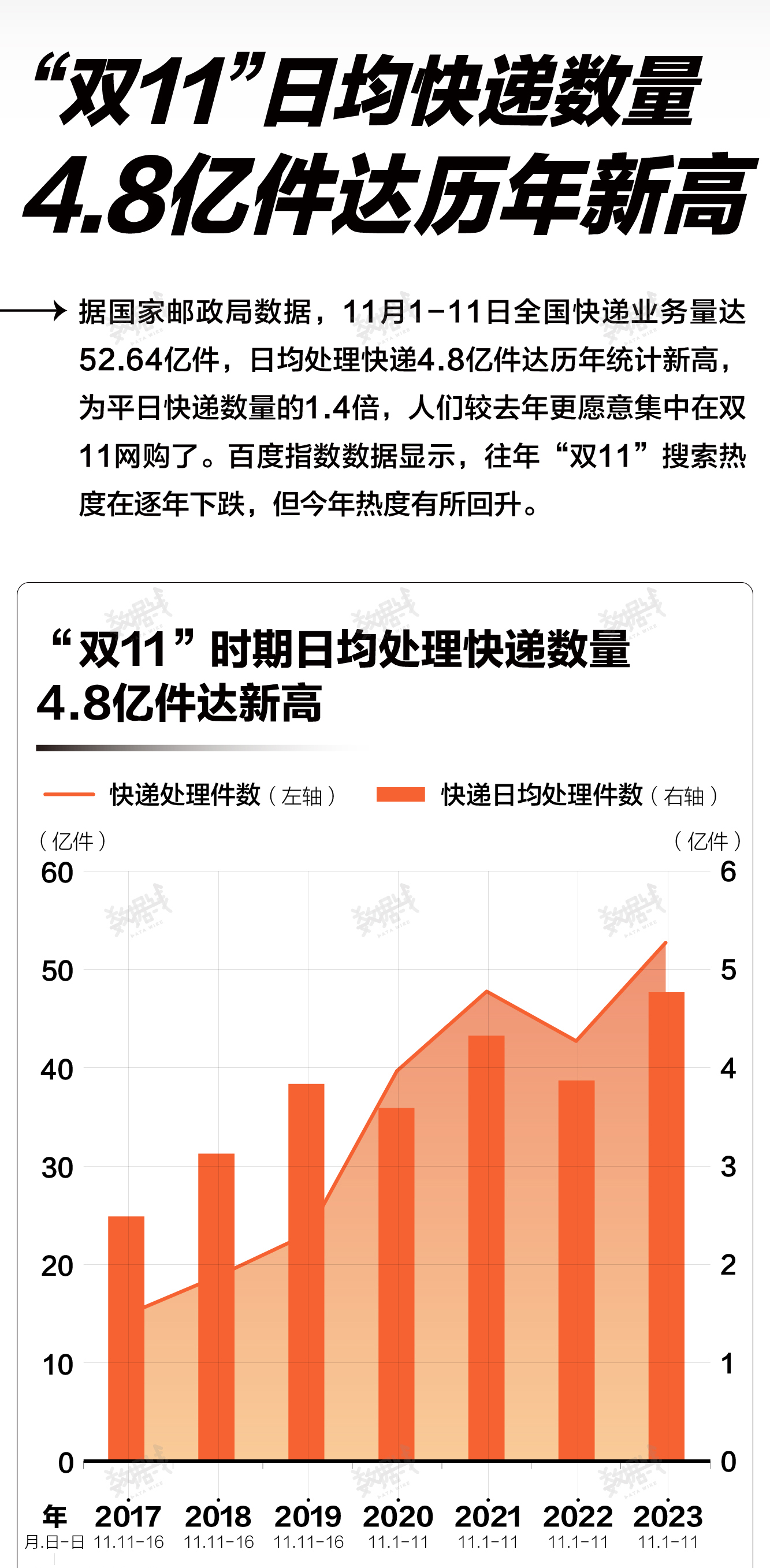
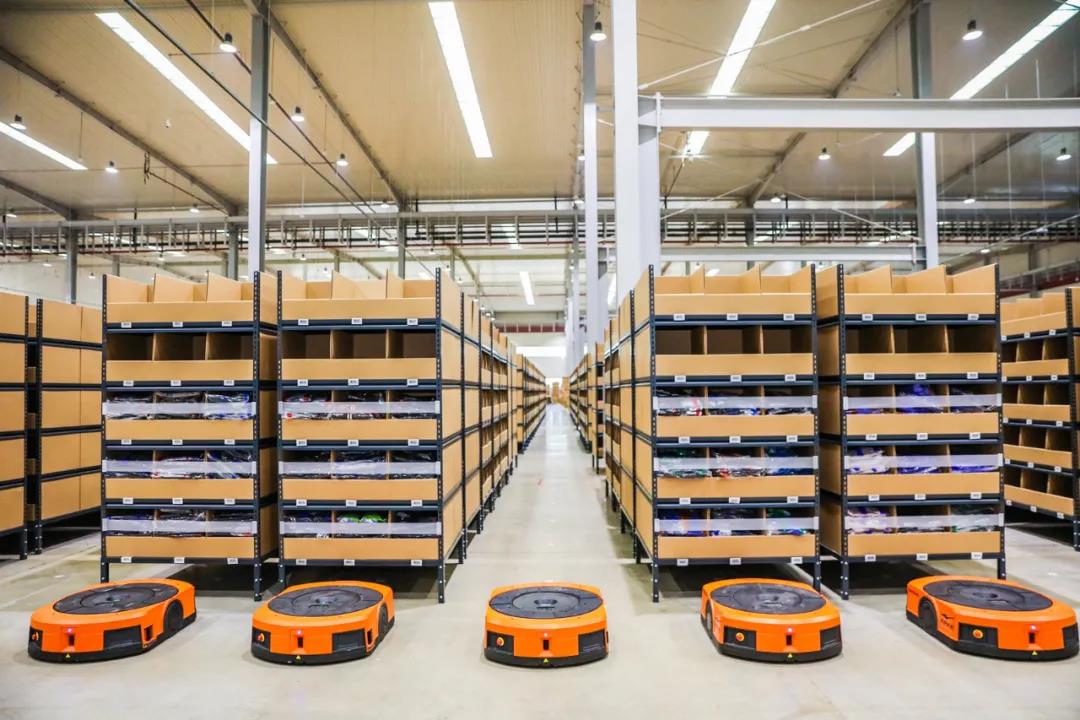
According to statistics from the State Post Bureau, the average daily number of express deliveries during this year's "Double Eleven" shopping festival reached 480 million, setting a new record. To cope with the surge in deliveries during "Double Eleven," logistics and express delivery companies have invested heavily in AGV robots to improve sorting efficiency. At sorting centers of Cainiao Logistics, JD Logistics, and others, tens of thousands of AGV robots are constantly moving about, efficiently and accurately sorting packages, allowing us to receive our parcels in a shorter time.
These AGV robots can pick up a package, automatically identify the address via QR code, and transport it to the corresponding sorting area for delivery. Compared to manual sorting, AGV robots significantly improve sorting accuracy and efficiency.
AGV Introduction
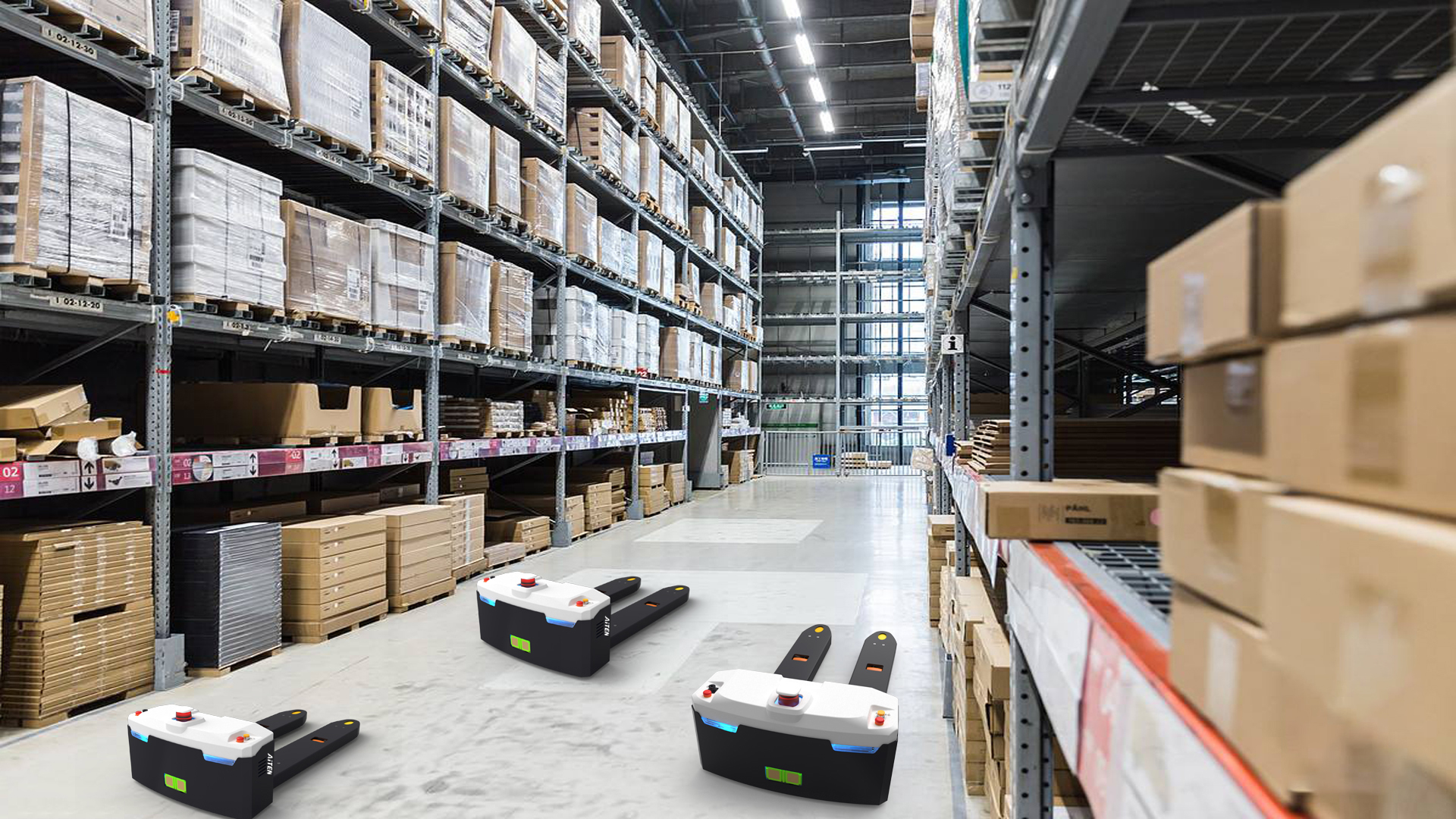
AGV (Automated Guided Vehicles), also known as unmanned transport vehicles, automated guided vehicles, or laser-guided vehicles, are characterized by their driverless operation. Equipped with an automatic guidance system, AGVs can automatically travel along predetermined routes without manual guidance, transporting goods or materials from the starting point to the destination. Another feature of AGVs is their flexibility, high degree of automation, and high level of intelligence. AGV travel paths can be flexibly changed according to warehouse location requirements and production processes, and the cost of changing operating paths is much lower than that of traditional conveyor belts and rigid conveyor lines. AGVs are generally equipped with loading and unloading mechanisms and can automatically interface with other logistics equipment to automate the entire process of loading, unloading, and handling goods and materials. In addition, AGVs are characterized by clean production. AGVs rely on their own batteries for power and operate without noise or pollution, making them suitable for many places that require a clean working environment.
.jpg)
Types of AGVs
AGVs have been around for 50 years since their invention, and with the expansion of their applications, their types and forms have become diverse. AGVs are often classified into the following types based on their navigation methods during automatic driving:
1. Electromagnetic Induction Guided AGVs
This electromagnetic induction guidance navigation method is currently used in the vast majority of commercially available AGVs, especially suitable for medium and large-sized AGVs.
2. Laser Guided AGVs
Currently, the application of this type of AGV is becoming increasingly widespread. Based on the same guidance principle, if the laser scanner is replaced with an infrared emitter or an ultrasonic emitter, a laser-guided AGV can become an infrared-guided AGV or an ultrasonic-guided AGV.
3. Vision-Guided AGVs
This type of AGV does not require any manually set physical paths, and therefore theoretically has the best guidance flexibility. With the rapid development of computer image acquisition, storage, and processing technologies, the practicality of this type of AGV is becoming increasingly strong.
In addition, there are various other forms of AGVs, such as ferromagnetic gyroscope inertial guided AGVs and optical guided AGVs.
Applications
1. Warehousing Industry: Warehousing is the earliest application of AGVs. In 1954, the world's first AGV was put into operation in a warehouse of Mercury Motor Freight in South Carolina, USA, for automated handling of inbound and outbound goods. Currently, there are approximately 20,000 AGVs of various types operating in 2,100 warehouses of different sizes worldwide. In the automated warehouse in the development zone put into operation by Haier Group in 2000, nine AGVs formed a flexible automated material handling system, successfully completing the handling of 23,400 inbound and outbound goods and parts daily.
2. Manufacturing Industry: AGVs play a significant role in manufacturing production lines, efficiently, accurately, and flexibly completing material handling tasks. Multiple AGVs can form a flexible logistics handling system, and the handling routes can be adjusted in a timely manner according to changes in the production process. This allows a single production line to manufacture more than a dozen products, greatly improving production flexibility and enterprise competitiveness. In 1974, Volvo Kalmar's car assembly plant in Sweden adopted an automated car assembly line based on AGVS (Automated Guided Vehicles) to improve the flexibility of its transportation system. This assembly line consisted of multiple AGVS units capable of carrying car bodies. After adopting this line, assembly time was reduced by 20%, assembly failures by 39%, investment payback period by 57%, and labor by 5%. Currently, AGVs are widely used in the manufacturing and assembly lines of major automakers worldwide, such as GM, Toyota, Chrysler, and Volkswagen.
In recent years, as a fundamental material handling tool in CIMS (Completely Integrated Manufacturing Systems), AGV applications have penetrated into various industries, including machining, home appliance manufacturing, microelectronics manufacturing, and cigarette production. The manufacturing sector has become the most widespread application area for AGVs.
3. Post Offices, Libraries, Ports, and Airports
In post offices, libraries, ports, and airports, the transportation of goods is characterized by large fluctuations in workload, high dynamism, frequent adjustments to work processes, and repetitive handling procedures. The parallel operation, automation, intelligence, and flexibility of AGVs can effectively meet the handling requirements of these environments. Sweden began using AGVs (Automated Guided Vehicles) in 1983 at the Greater Stockholm Post Office, Japan in 1988 at the Tama Post Office in Tokyo, and China in 1990 at the Shanghai Postal Hub to handle postal items. In the Port of Rotterdam, Netherlands, 50 AGVs, known as "yard tractors," perform the repetitive task of transporting containers from the ship's side to a warehouse hundreds of yards away.
4. Tobacco, Pharmaceutical, Food, and Chemical Industries In industries such as tobacco, pharmaceuticals, food, and chemicals, where there are special requirements for cleanliness, safety, and zero emissions in handling operations, the application of AGVs is also gaining importance. Many cigarette companies in China, such as Qingdao Yizhong Group, Yuxi Hongta Group, Honghe Cigarette Factory, and Huaiyin Cigarette Factory, use laser-guided AGVs to handle palletized goods.
5. Hazardous Locations and Specialized Industries
In the military, AGVs, based on autonomous driving, can be integrated with other detection and dismantling equipment for battlefield mine clearance and site reconnaissance. The British military is developing the MINDER Recce, an automated reconnaissance vehicle with mine detection, disposal, and route verification capabilities. In steel mills, AGVs are used for transporting furnace materials, reducing the labor intensity of workers. In nuclear power plants and facilities using nuclear radiation for preservation and storage, AGVs are used for transporting goods, avoiding hazardous radiation. In film and roll warehouses, AGVs can accurately and reliably transport materials and semi-finished products in dark environments.
Henan Jinyuan Huanyu Energy Storage Technology Co., Ltd. is a national high-tech enterprise headquartered in Beijing, with its production base in Xinxiang. It focuses on residential energy storage products, low-speed power lithium battery systems, and intelligent charging solutions, primarily serving applications such as mobile robots, low-speed autonomous driving, and industrial electric vehicles. The company possesses the capability to provide power supply system solutions for special scenarios including high temperature, high rate operation, low temperature, and explosion-proof applications. With over 30 patents, Jinyuan Huanyu is committed to becoming a globally trusted mobile energy provider!





.png)