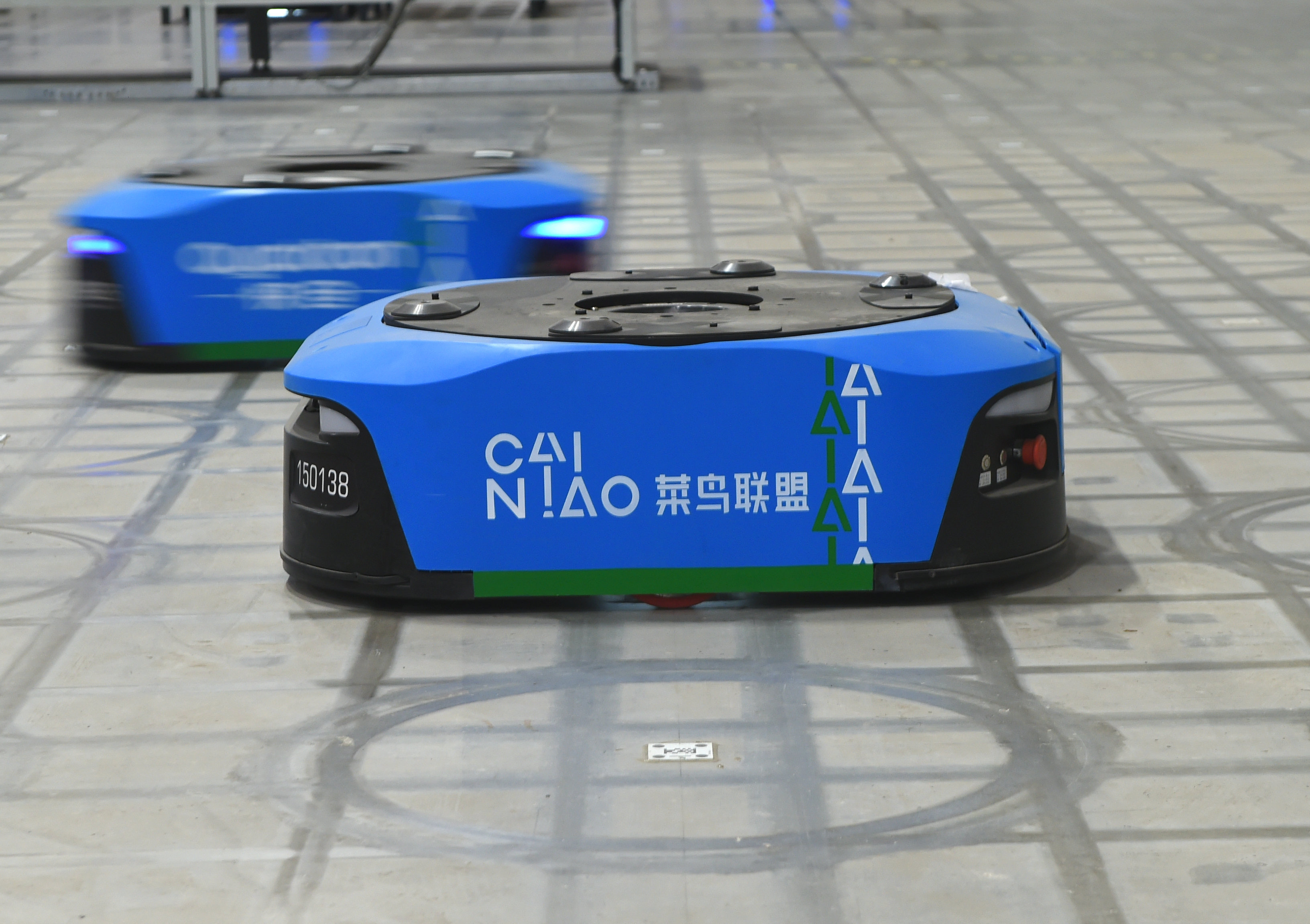
Driven by the booming indoor and outdoor mobile robot industry, the mobile robot market continues to heat up. Industry specialization categorizes robots into industrial application-level robots and modular robot chassis.
Modular mobile robot chassis are responsible for the robot's positioning, navigation, and obstacle avoidance functions, enabling intelligent movement. What are the main robot structures currently available for modular mobile robots?
Currently, modular mobile robot platforms are mainly divided into two categories and four robot chassis structures:
Two categories: Wheeled and tracked types.
Four robot chassis structures:
1. Wheeled Ackerman Steering Robot: This chassis is used in paved road scenarios for heavy load delivery up to 600kg, park security, smart cleaning, and intelligent transportation applications. The structure is driven by a differential axle on the rear wheels, with the front wheels controlling direction to achieve forward, backward, and radius steering. It features high load capacity and high control precision, making it a standard robot chassis for logistics, security, cleaning, and elderly mobility assistance applications.
2. Wheeled Four-Wheel Drive Omnidirectional Robot: This chassis is used for delivering loads up to 80kg on paved roads and in some light off-road scenarios, as well as in applications such as park security and intelligent mobility. The structure features four-wheel steering, with the rear wheels also possessing steering and power output capabilities, allowing for steering and power output not only in the same direction as the front wheels but also in the opposite direction. Its main purpose is to enhance the robot's maneuverability and maneuverability in confined spaces, facilitating easy movement from one corner to another and reducing the turning radius when making U-turns. It boasts high sensitivity and control precision, making it a standard chassis for logistics, security, and assistive robots for the elderly and intelligent wheelchairs.
3. Wheeled Differential Robot: This chassis is primarily used in relatively simple indoor and outdoor scenarios, such as food delivery, disinfection, and education. It boasts advantages such as high traction, simple control, and high precision, making it suitable for urban environments and capable of moving on various indoor and outdoor paved surfaces. For example, it is a standard chassis configuration for food delivery, distribution, and educational robots in hotels, restaurants, and schools.
4. Tracked Differential Robots: Tracked robot chassis are mainly used in special scenarios such as agriculture, military, and firefighting. They offer advantages such as high traction, resistance to slippage, and good off-road performance, making them suitable for outdoor and urban environments. They can move on various complex terrains, such as sand and mud, and are a standard chassis configuration for agricultural, firefighting, and military robots.
Source: 518 Intelligent Equipment Online